Tree Trimming & Pruning in Delano
Tree Trimming & Pruning for Delano homes - local conditions, a clear process, and one call to get it started.
Homes here share more than a ZIP: they share wind, storm tracks and the canopy both produce.
Good pruning in Delano is almost invisible from the street. The tree keeps its shape and its shade; what changes is everything you cannot see from the ground - the load paths, the unions, the sail area - until the storm grades the work and the trimmed tree is simply still there.
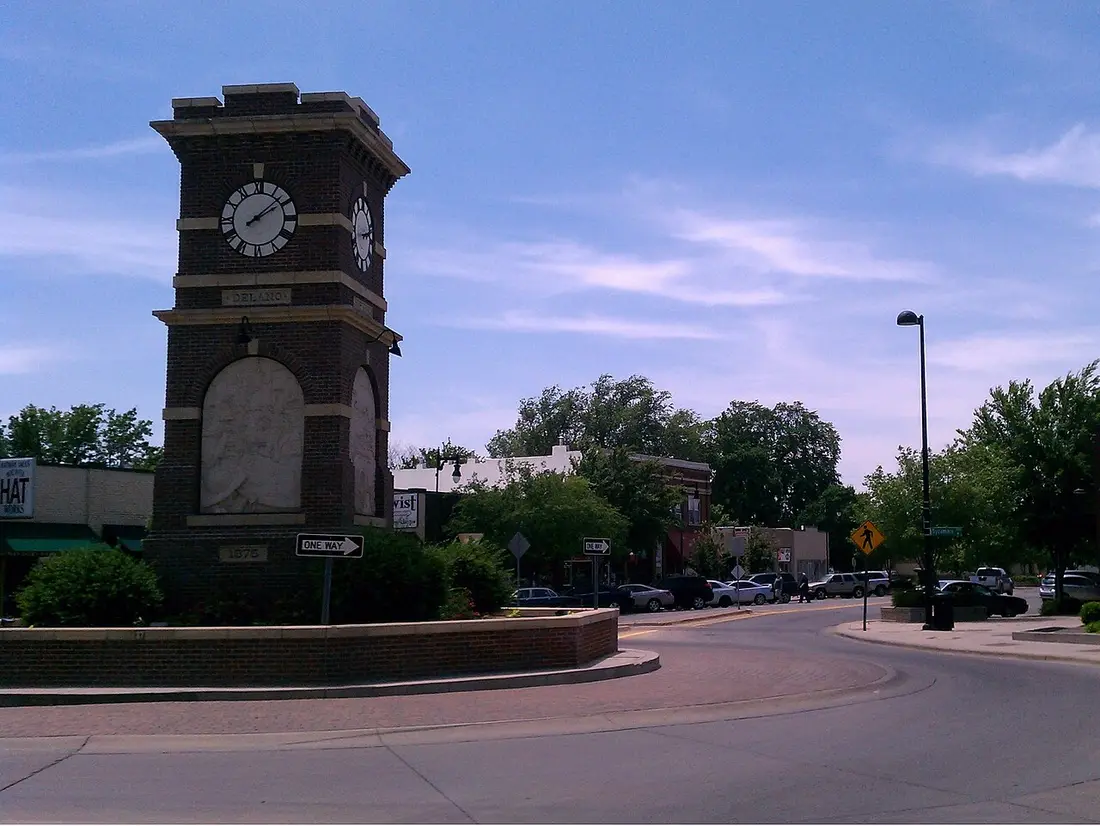
Delano sits on the west bank of the Arkansas River, once a separate cattle-era town and now a revived historic district along West Douglas Avenue, marked by its clock tower. Small early-1900s homes fill the streets behind the shops, toward Friends University, under a plain working canopy of elm, hackberry and mulberry.
Local conditions shape the work here. Small early-1900s frame homes and bungalows, many updated, on modest lots with volunteer and planted trees mixed - and that shapes the tree work directly. Delano's canopy is half planted, half volunteered: Siberian elms and mulberries seeded themselves into alleys and fence lines a lifetime ago and are now big, brittle and over the roofs. For tree trimming & pruning in Delano, trimming calls here read the structure first - deadwood, crossings and clearance decide the cut list.
There is a reason crews know Delano by its landmark: the pattern near the Delano clock tower on Douglas Avenue - old trees, young trees, river trees, edge trees - repeats faithfully across the whole map.
Signs Delano Homes Need Tree Trimming & Pruning
A crown too dense to see through
An unthinned crown is a sail: it catches the wind's full force and shades out its own interior.
Limbs low over roof and street
Branches resting on shingles, scraping in wind, or hanging into the clearance the street and sidewalk need - contact damage happens a storm-season rub at a time.
Two trunks racing upward
Co-dominant stems with bark pinched between them are a split being scheduled.
Why This Work Runs in Delano
Pruning is applied biology. Every cut tells the tree where to grow next, and cuts made at the branch collar - where the tree can wall off the wound - heal in a way flush cuts and stubs never do. A Wichita pruning plan reads the tree's structure first and the owner's sightlines second, because the structure is what the storm will read.
Delano's canopy is half planted, half volunteered: Siberian elms and mulberries seeded themselves into alleys and fence lines a lifetime ago and are now big, brittle and over the roofs. River wind works the west-facing limbs. Much of the work is triage - keep the sound elms pruned, take the brittle volunteers down before gravity does.
In Delano, that plays out street by street - for trimming, watch the deadwood, the crossing limbs and the clearance gaps closing. Field note for the Delano route: the oldest plantings carry the oldest defects, and the assessment starts there.
Spring's second act is the leaf-out audit. After the first warm weeks, the pattern repeats street by street: the crown that comes back thin, the limb that never leafs at all, the ash the borer spent the winter inside. Owners who walk their trees at leaf-out start their decisions from evidence; owners who skip it find out across the summer, one falling limb at a time.
Two things decide how much a visit accomplishes: access and honesty. Access means the crew can reach the trees, the gates and both side yards. Honesty means the full history - the limb that fell two summers ago, the crack that opened last winter, the treatment from three owners back. With both, the first visit usually settles the diagnosis for good.
This season, the watch item in Delano is the sky: every spring cell that builds over the plains grades the canopies below it, and the yards near the Delano clock tower on Douglas Avenue read the results first.
If the problem involves a big tree over a structure, check that gates and drive access are clear. A lift that cannot reach the tree is the most common reason a first visit in Wichita ends with a second one scheduled.
How Tree Trimming & Pruning Works in Delano
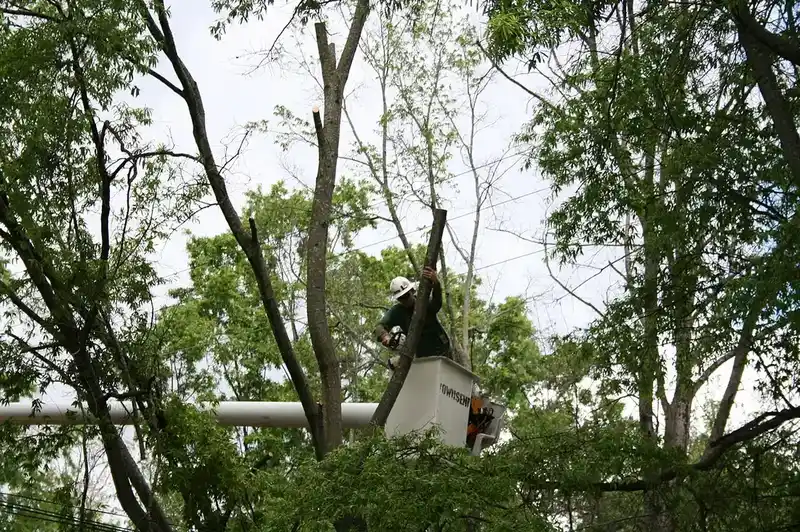
The full step-by-step process for this service - inspection, scope, the work itself and follow-up - is laid out on the main Tree Trimming & Pruning page. In Delano the same sequence runs with the local map in hand: the canopy around the Delano clock tower on Douglas Avenue, the housing pattern described above, and the exposure this neighborhood actually carries.
The Delano Angle
Ask anyone who works trees in Delano and they will tell you the pattern repeats: the storm losses, the species failures, and the seasons grade the result. Housing here tells the arborist where to look first. Small early-1900s frame homes and bungalows, many updated, on modest lots with volunteer and planted trees mixed.
On the tree side, the pattern is written by the neighborhood itself. Delano's canopy is half planted, half volunteered: Siberian elms and mulberries seeded themselves into alleys and fence lines a lifetime ago and are now big, brittle and over the roofs. River wind works the west-facing limbs. Much of the work is triage - keep the sound elms pruned, take the brittle volunteers down before gravity does. A proper tree trimming & pruning call in Delano therefore starts with reading - the exposure, the defects, the evidence - and only then moves to the work.
Delano does not sit alone on the map. It weathers the same storms as Riverside, Downtown Wichita and Southwest Wichita - the same cells cross the county, the same wind works the same canopies, and the same seasons move through all of them within the same few weeks. Homes on these blocks share crews, routes and seasons - which is why a tree solved properly on one street tends to stay solved.
On the route map, Delano sits in the wichita neighborhood group, ZIP 67213 - close enough to Riverside, Downtown Wichita that crews work them on the same runs. That local memory is the quiet advantage of route-based work in Delano.
What the work actually protects in Delano is not the tree alone - it is the roofs, fences, vehicles and routines underneath it. Framed that way, the order of jobs writes itself: hazards first, structure second, appearance third, and the assessment always.
Prevention That Helps in Delano
- Keep oaks on the winter calendar to respect oak wilt season.
- Prune young trees every two to three years - small cuts build the structure that big cuts later cannot.
- Water and mulch stressed trees; a vigorous tree closes pruning wounds fastest.
Small early-1900s frame homes and bungalows, many updated, on modest lots with volunteer and planted trees mixed.
Keep Exploring
Tree Trimming & Pruning nearby:
- Tree Trimming & Pruning in Riverside
- Tree Trimming & Pruning in Downtown Wichita
- Tree Trimming & Pruning in Southwest Wichita
- Tree Trimming & Pruning in South Wichita
More services in Delano:
- Tree Health & Disease Treatment in Delano
- Hedge & Shrub Trimming in Delano
- Stump Removal in Delano
- Stump Grinding in Delano
See the full tree care page for Delano and the Tree Trimming & Pruning overview for Wichita.
Tree Trimming & Pruning in Delano - Questions
When is the best time to trim trees in Delano?
Late winter, for most species: dormant wood, visible structure, and the work finished before storm season. Oaks belong in the cold months specifically, because the beetles that carry oak wilt fly in the warm ones. Deadwood, hangers and hazards ignore the calendar - they come off whenever they are found.
How much of my Delano tree can be pruned at once?
As a working guide, a healthy tree should not lose more than about a quarter of its live crown in a year, and often the right pass takes far less. Over-thinning strips the tree's energy income and triggers the weak regrowth you were trying to avoid. Structure is built over several modest passes.
How does Tree Trimming & Pruning work around the Delano clock tower on Douglas Avenue?
The landmark matters because it concentrates the pattern - exposure, storm paths, and the neighborhood's planting era in one place. Tree Trimming & Pruning visits in Delano read that pattern first: where the wind, ice and decline gather, the tree work follows, and the scope is drawn from it.
A Dead Limb Over the Roof, a Leaning Trunk or Storm Debris in the Yard?
One call connects you with a tree care professional serving Wichita and the surrounding communities - assessment, trimming, removal and cleanup.
📞 Call Now