Stump Grinding Through the Wichita Year
Spring is storm season in Wichita, and it is tree season too. From March into June, supercell thunderstorms roll off the plains with damaging wind, and the trees that get a structural look before the season are the ones that come through it standing. Late spring is also when winter's hidden damage declares itself - limbs that died under ice, crowns that leaf out thin, and borers resuming their work in the ash.
Wichita winters swing: bright mild weeks, then an ice storm or a hard freeze. Ice loads limbs past their breaking weight, frozen wood turns brittle, and the trees with split unions and dead tops are the ones that come down. Winter is the best pruning season here - structure is visible, disease pressure is low, and the trees read in winter get fixed before the spring storms interview them.
Summer splits in two: the storm tail of June and early July, when late cells still tear at crowns, and the long bake that follows, when drought stress shows first in the trees planted in tight soil and parking-lot islands. Most storm damage is discovered in summer - the storm did the work in spring, and the failures report as the heat and wind finish them. Deep watering of young trees is the season's quiet essential.
Stump Grinding in Depth
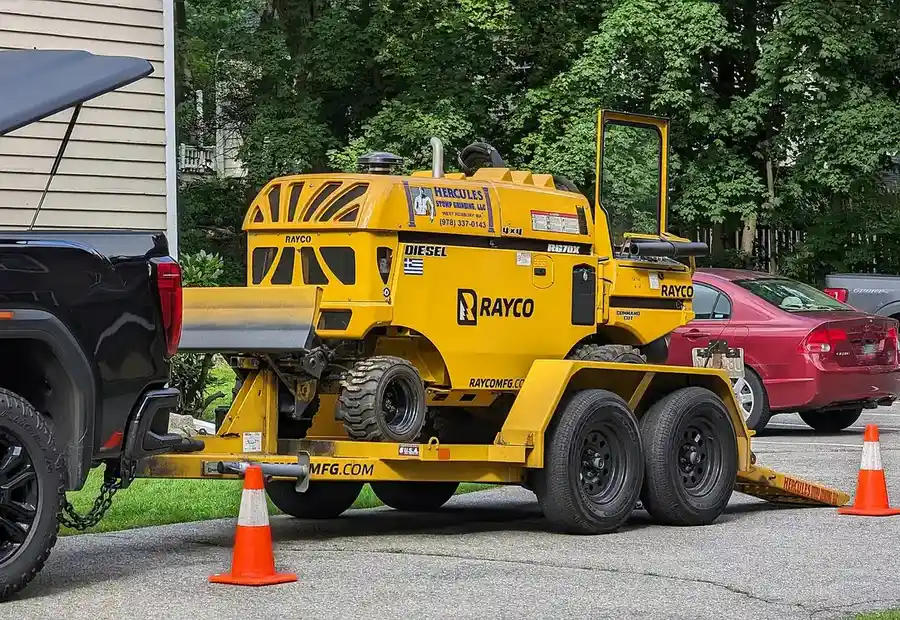
Grinding rewards owners who think in finishes. The same stump can be a six-inch lawn grind, a deep plant-ready excavation of chips, or a full chase of the surface roots lifting the walk - three different jobs with three different clocks, all called by one name. The honest conversation starts with what the ground does next, because the depth that serves a lawn wastes money under a patio, and the depth that serves a patio is not a luxury under a lawn.
The grindings themselves have a quiet second life: raked into the pit, they settle and compost into the soil over a season or two, feeding exactly the biology that a new planting wants - provided the new tree is offset from the old footprint, where the ground is soil rather than sawdust. Owners who plan that offset at the grinding, not at the planting, get both jobs right in one visit.
Choosing the Right Help
Stump bids are won and lost on two questions: how deep, and what happens to the grindings. Ask both, and ask what surface roots are included. A bid that answers in inches and in writing - with the utility locate confirmed before the date is set - is a professional bid; a number called out from the driveway is a guess wearing a uniform.
The Climate Behind It
Wichita sits on the central Kansas plains where the Arkansas and Little Arkansas rivers meet, and plains weather writes the tree calendar here: spring severe storms with damaging wind, winters that deliver canopy-breaking ice, and long summer droughts broken by downpours. A tree in Wichita is not tested by one climate - it is tested by all of them, in turns, every year of its life.
Wind is the signature force. Kansas wind works at trees day after day - flagging crowns, fatiguing weak unions - and storm outflows arrive with gusts that collect on whatever the daily wind loosened. A tree's structure, built by its pruning history or its neglect, is its real storm rating, whatever species the tag said.
How Stump Grinding Works
Walk the stumps first
Each stump is sized, its species and rot state noted, and the underground question asked - lines, sprinklers and shallow utilities get located before teeth meet wood.
Set the depth and the finish
You choose how deep, whether grindings stay as fill or come out, and what the spot becomes next - the plan follows the spot's future, not habit.
Grind in passes
The wheel works the stump and its flare down below grade, chasing the near surface roots that lift walks and mowers.
Leave a plantable spot
Grindings raked level or hauled as agreed, the pit settled, and the ground ready for seed, sod or a new tree set at a respectful distance.
Doing It Yourself vs a Professional
The DIY Route
- Burning a stump in city limits trades a yard problem for a fire-code problem, and it rarely even works
- Chemical stump removers take seasons, not weekends - and the stump is fully present for all of them
- Pulling a stump with a truck and a chain breaks bumpers, sprinkler lines and occasionally windows, before it breaks roots
VS
The Professional Route
- Locates utilities and sprinkler lines before the wheel turns
- Grinds below grade and chases the surface roots that actually lift things
- Tells you honestly what grinding will not do - and what the alternatives are
Keep It From Coming Back
A ground stump becomes invisible fastest on ground that is finished with intention. The habits below turn the grinding pit into lawn or bed on schedule, instead of a settling mystery the mower finds every week.
- Decide the stump when you decide the removal - same-visit grinding is the simplest version of this job.
- Do not plant a new tree in the old stump's exact footprint; offset it and give the roots fresh ground.
- Top up the grinding pit as it settles over the first season - decomposing chips sink a little, predictably.
- Watch ground-out spots of diseased trees for mushroom flushes the first wet spring; they fade as the food runs out.
- Keep sucker regrowth cut on any stump you choose to keep - it will not tire before you do.