Wichita Tree Services

Tree Trimming & Pruning in Wichita, KS

Tree trimming and pruning in Wichita - structural cuts, deadwood and clearance done by the tree's biology, so the canopy stands up to Kansas wind and ice instead of reporting to them.

Ice is the second force, and it is patient. The great Kansas ice storms load every limb with weight the wood never evolved to carry, and the failures they cause - split trunks, torn crowns, whole trees down - arrive in a single night across whole neighborhoods. Species with brittle wood and trees with included bark pay first, which is why the canopy's composition matters as much as its size.

The tree stock matches the city's history: American elm and hackberry in the old neighborhoods, ash planted heavily in the boom decades, Bradford pears and silver maples planted for fast shade, and cottonwood, pecan and walnut timber along the river corridors. Each carries its own Wichita fate - the borer for the ash, the split for the pears, the shed limb for the cottonwoods - and the pages here are organized around exactly that.

Signs You Need Tree Trimming & Pruning

Deadwood in the crown

Dead branches are the tree's confession that its energy budget changed - and they are falling hazards sized by the wind's timing, not yours. A deadwood pass is the minimum unit of tree care.

Crossing and rubbing limbs

Branches that cross grind each other's bark away, opening wounds that invite decay into both. One of the pair was always meant to go; pruning chooses which, early.

Two trunks racing upward

Co-dominant stems with bark pinched between them are a split being scheduled. Subordinating one while the tree is young is cheap; cabling or removing the loser later is not.

Limbs low over roof and street

Branches resting on shingles, scraping in wind, or hanging into the clearance the street and sidewalk need - contact damage happens a storm-season rub at a time.

A crown too dense to see through

An unthinned crown is a sail: it catches the wind's full force and shades out its own interior. Thinning lets wind pass and light in, and the tree stands easier for it.

Suckers and watersprouts everywhere

Crowds of weak vertical shoots - especially after an old topping cut - are stress growth: fast, poorly attached, and first to tear out in ice. They mark a tree asking for a real pruning plan.

Why Tree Trimming & Pruning Is a Standing Job in Wichita

Pruning is applied biology. Every cut tells the tree where to grow next, and cuts made at the branch collar - where the tree can wall off the wound - heal in a way flush cuts and stubs never do. A Wichita pruning plan reads the tree's structure first and the owner's sightlines second, because the structure is what the storm will read.

Timing carries half the craft. Late winter is the classic Kansas window: the tree is dormant, its structure is bare to the eye, and oak wilt's beetle couriers are inactive - which is why oaks here are pruned in the cold months as a rule. Storm hazards and deadwood keep no calendar; they come off when found.

The anti-pattern has a name every arborist knows: topping. Cutting a crown back to stubs feels like risk reduction and produces the opposite - a thicket of weakly attached regrowth on decaying wood, more dangerous in five years than the original tree. Wichita's older streets are full of topped trees still paying that bill, one ice storm at a time.

Tree Trimming & Pruning Through the Wichita Year

Spring is storm season in Wichita, and it is tree season too. From March into June, supercell thunderstorms roll off the plains with damaging wind, and the trees that get a structural look before the season are the ones that come through it standing. Late spring is also when winter's hidden damage declares itself - limbs that died under ice, crowns that leaf out thin, and borers resuming their work in the ash.

Wichita winters swing: bright mild weeks, then an ice storm or a hard freeze. Ice loads limbs past their breaking weight, frozen wood turns brittle, and the trees with split unions and dead tops are the ones that come down. Winter is the best pruning season here - structure is visible, disease pressure is low, and the trees read in winter get fixed before the spring storms interview them.

Fall is the assessment and planting window. The severe season is past, the canopy shows its true structure as the leaves thin, and there is time to cable what can be kept, remove what cannot, and plant replacements while the soil is still warm. It is also when honest tree work happens, because a bare-crowned tree hides nothing from an arborist.

Tree Trimming & Pruning in Depth

Pruning has a mathematics owners rarely hear: every cut removes leaf area, and leaf area is income. A tree pruned within its budget spends the season growing and closing wounds; a tree pruned past it spends the season surviving - throwing weak watersprouts, sunburning its own bark, falling behind on the energy that fights borers and drought. The skilled pass is measured not by what is on the ground afterward but by how the crown looks in three years.

There is also the matter of proof. In a county where storm claims turn on the tree's condition before the weather, a pruning file - dates, scope, photographs - is the difference between a tree documented as maintained and a tree argued to be neglected. Insurers, buyers and future arborists all read the same file. Keeping it is part of the work, and the crew that hands you dated records unprompted is telling you how they run the rest of the job.

Choosing the Right Help

Judge a pruning bid by its vocabulary. Collars, laterals, reduction, structure, subordination - those words describe cuts a tree can live with. Height reduction, shaping it up, taking a third off the top - those describe cuts a tree pays for. Ask what the crown will look like in three years, and choose the bidder whose answer involves the tree's architecture rather than the truck's convenience.

The Climate Behind It

Wichita sits on the central Kansas plains where the Arkansas and Little Arkansas rivers meet, and plains weather writes the tree calendar here: spring severe storms with damaging wind, winters that deliver canopy-breaking ice, and long summer droughts broken by downpours. A tree in Wichita is not tested by one climate - it is tested by all of them, in turns, every year of its life.

Wind is the signature force. Kansas wind works at trees day after day - flagging crowns, fatiguing weak unions - and storm outflows arrive with gusts that collect on whatever the daily wind loosened. A tree's structure, built by its pruning history or its neglect, is its real storm rating, whatever species the tag said.

How Tree Trimming & Pruning Works

Read the structure first

The visit starts with the crown's architecture: leader, unions, deadwood, load paths and targets below - the cut list is drawn from that read.

Set the pruning goals

Clearance, structure, health or storm readiness - you hear which cuts serve which goal, and what is deliberately being left alone.

Cut by the collar, in order

Dead and hazardous wood first, then structural cuts, then clearance - each cut placed where the tree can close it, none taken just because the saw was nearby.

Clean the site, brief the owner

Brush chipped and hauled or stacked as agreed, and you get the tree's story: what came off, what to watch, and when the next pass is due.

Doing It Yourself vs a Professional

The DIY Route

  • Topping a tree to 'make it safe' manufactures a more dangerous tree on a five-year fuse
  • Flush cuts and stubs cannot close; each one is a decay doorway cut into the trunk's future
  • Pruning from a ladder with a chainsaw trades a tree problem for an emergency-room story
VS

The Professional Route

  • Prunes to the species and the structure - an oak, a maple and a pear are three different plans
  • Uses collar cuts and reduction cuts the tree can actually close and hold
  • Refuses to top, and will explain what to do instead

Keep It From Coming Back

Pruning lasts longest on trees whose owners handle the small stuff between visits. The list below is what the pruning crew wishes every homeowner did - the habits that keep a good structure good and the next pass small.

  • Prune young trees every two to three years - small cuts build the structure that big cuts later cannot.
  • Never allow topping; ask for reduction cuts to suitable laterals instead.
  • Keep oaks on the winter calendar to respect oak wilt season.
  • Clear limbs off the roof before they rest on it - contact starts the damage quietly.
  • After any storm, look up: the hanger you spot in June is the limb that falls in October.
  • Water and mulch stressed trees; a vigorous tree closes pruning wounds fastest.
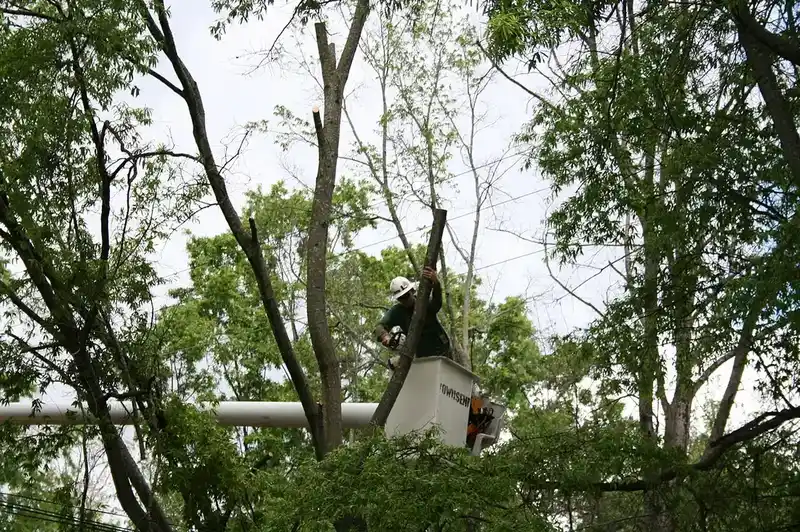
Tree Trimming & Pruning in the Surrounding Communities

The communities around Wichita share its storm tracks and its ice - with their own twists of storm history, acreage timber and open-country wind.

Tree Trimming & Pruning in Clearwater

Clearwater is a small railroad-era city southwest of Wichita on the Chikaskia River, with a historic downtown and a mix of older homes and new subdivisions drawing commuters to the metro. Its older streets keep a small-town canopy of elm and hackberry planted generations back.

Tree Trimming & Pruning in Mulvane

Mulvane is an old railroad town south of Wichita on the Arkansas River, with a preserved Main Street and depot, newer growth near the Kansas Star Casino, and a strong small-city identity. The river's bottomland timber frames the town on its low sides.

Tree Trimming & Pruning in Rose Hill

Rose Hill is a growing Butler County town southeast of Wichita, where newer subdivisions and acreage homes have spread around its schools. It draws families who want country space within commuting range - and its trees split between new plantings and old farm timber.

Tree Trimming & Pruning in Bel Aire

Bel Aire is a growing city on Wichita's north edge, built around lakes, parks and newer subdivisions along the K-254 corridor. It has grown from a small community into one of the metro's active family suburbs, planting its canopy as it goes.

Where Tree Trimming & Pruning Is Needed Most

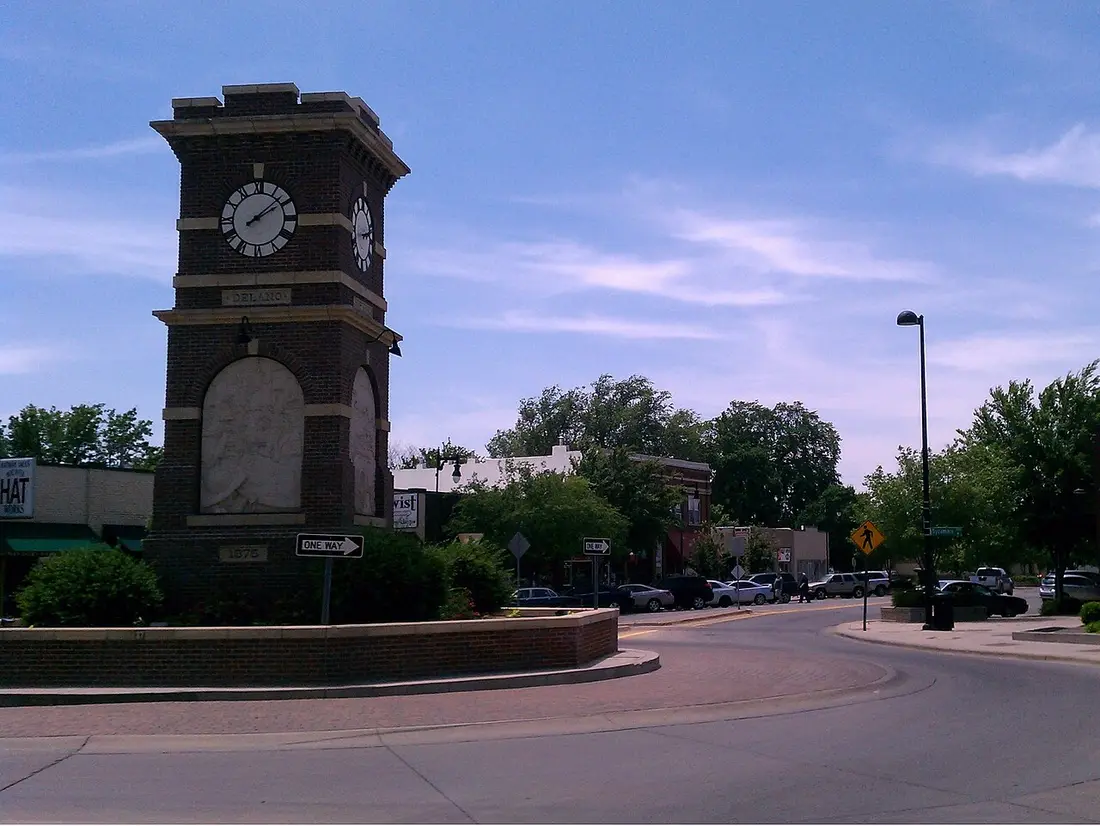
In the historic core and the east side - Riverside, College Hill, Eastborough, Downtown Wichita, Old Town and Delano, Midtown, South Wichita, Planeview, Oaklawn - the canopy runs from Wichita's oldest planted elms and oaks to the boom-decade ash and pear of the postwar subdivisions, and tree trimming & pruning follows that record: heritage structure work on the older streets, species failure calendars in the subdivisions, and wind exposure that grows toward the open edges.

Across the east and west growth sides and the north side - East Wichita, Northeast Wichita, Uptown Wichita, West Wichita, Southwest Wichita, Auburn Hills and North Wichita, Benjamin Hills, Northwest Wichita, Derby, Andover, Haysville - sit the subdivision waves of the 1970s onward, the growth-edge neighborhoods and some of the county's busiest storm tracks, which together make this the steadiest tree trimming & pruning territory in the city.

Beyond the city line, the same work runs in Clearwater, Mulvane, Rose Hill, Bel Aire, Park City, Valley Center, Kechi, Maize, Goddard, Newton, Hutchinson - railroad towns, fast-growing suburbs and county-seat communities where acreage timber, shelterbelts and open-country exposure add their own chapters. Every one of these area pages carries the local detail for tree trimming & pruning in that community.

Coverage, In Full

Tree Trimming & Pruning runs across the whole service map: Riverside, College Hill and Eastborough; Downtown, Old Town, Delano and Midtown; East Wichita, the northeast growth edge and Uptown; South Wichita, Planeview and Oaklawn; the west side, Southwest Wichita and Auburn Hills; North Wichita, Benjamin Hills and Northwest Wichita; and beyond the city in Derby, Andover, Haysville, Clearwater, Mulvane, Rose Hill, Bel Aire, Park City, Valley Center, Kechi, Maize, Goddard, Newton and Hutchinson. One call covers all of it - the local pages above carry the detail for each. If your street is not named here, call anyway: routes grow with demand, and most Sedgwick County addresses are already within reach of a scheduled run.

From the Wichita Tree Guides

Ice Storms and Your Trees: A Kansas Survival Guide

Ice adds hundreds of pounds to every limb, and it collects on the defects the tree already had - split unions, dead tops, end-heavy limbs fail first and loudest. Survival is decided in the calm seasons: structural pruning, balanced crowns, and species choices; during the storm itself, the only safe move is distance.

Read the Guide

When to Trim: A Kansas Tree Trimming Calendar

Late winter is the plains' great pruning window - dormant wood, visible structure, inactive disease beetles - but every species keeps one date of its own. Spring bloomers are pruned right after flowering, oaks in the cold months only, and deadwood and hazards on the day they are found, in any month at all.

Read the Guide

Tree Trimming & Pruning Questions

How often do Wichita trees need pruning?

Young trees: a structural pass every two to three years while their architecture is being decided. Mature trees: every three to five years for deadwood, clearance and structure - sooner for trees over roofs and targets, and after any storm that leaves hangers. Ash under borer watch and fast species run on shorter leashes.

Should I prune a tree that looks sick?

Prune the dead out, yes - deadwood harbors pests and falls on its own schedule. But heavy pruning of a struggling tree can spend energy it needs. The order matters: diagnose first (borer, disease, roots, drought), then a pruning plan that serves the diagnosis.

Can pruning fix a tree that was topped years ago?

Partly, over years. Restoration pruning selects the strongest regrowth stems, subordinates the rest, and rebuilds a framework in stages. It never fully erases the decay the stubs invited, but a well-restored tree stands far safer than one left to its thicket. Wichita's older neighborhoods are full of candidates.

What affects the cost of trimming a tree in Wichita?

The tree's size and species, how much of the crown the plan touches, the targets below it, access for equipment, and whether the brush is chipped and hauled. A young maple's training pass and a full structural prune of a forty-foot elm over a roof are different jobs - both start with the same look up.

When is the best time to trim trees in Wichita?

Late winter, for most species: dormant wood, visible structure, and the work finished before storm season. Oaks belong in the cold months specifically, because the beetles that carry oak wilt fly in the warm ones. Deadwood, hangers and hazards ignore the calendar - they come off whenever they are found.

How much of my Wichita tree can be pruned at once?

As a working guide, a healthy tree should not lose more than about a quarter of its live crown in a year, and often the right pass takes far less. Over-thinning strips the tree's energy income and triggers the weak regrowth you were trying to avoid. Structure is built over several modest passes.

What is the difference between trimming and topping in Wichita?

Trimming - proper pruning - cuts branches back to collars and suitable laterals, keeping the tree's natural structure and its ability to close wounds. Topping cuts limbs back to stubs at a chosen height. The stubs decay, the regrowth attaches weakly, and the tree becomes more hazardous than it started. They are opposites wearing similar names.

Will pruning help my Wichita tree survive storms?

It is the single most effective preparation there is. Removing deadwood, reducing end weight on long limbs, correcting co-dominant unions and easing a sail-dense crown all lower the storm's leverage on the tree. No pruning makes a tree storm-proof - it makes the tree's failure less likely and less costly when the big wind comes.

Please note: Wichita Tree Service is an independent directory and referral service, not a tree service contractor. The professionals reachable through this site are independent businesses; any agreement for work is between you and the professional you engage. Service information on this site is general educational material - the scope of any real tree work is set by an on-site inspection.

A Dead Limb Over the Roof, a Leaning Trunk or Storm Debris in the Yard?

One call connects you with a tree care professional serving Wichita and the surrounding communities - assessment, trimming, removal and cleanup.

📞 Call Now
📞 Call Now