Tree Removal Through the Wichita Year
Fall is the assessment and planting window. The severe season is past, the canopy shows its true structure as the leaves thin, and there is time to cable what can be kept, remove what cannot, and plant replacements while the soil is still warm. It is also when honest tree work happens, because a bare-crowned tree hides nothing from an arborist.
Summer splits in two: the storm tail of June and early July, when late cells still tear at crowns, and the long bake that follows, when drought stress shows first in the trees planted in tight soil and parking-lot islands. Most storm damage is discovered in summer - the storm did the work in spring, and the failures report as the heat and wind finish them. Deep watering of young trees is the season's quiet essential.
Wichita winters swing: bright mild weeks, then an ice storm or a hard freeze. Ice loads limbs past their breaking weight, frozen wood turns brittle, and the trees with split unions and dead tops are the ones that come down. Winter is the best pruning season here - structure is visible, disease pressure is low, and the trees read in winter get fixed before the spring storms interview them.
Tree Removal in Depth
A removal is the one tree job that resets a site completely - shade, risk, root competition and all - which is why its timing matters so much. Done a season early, it merely trades a short remainder of hazardous life for a clean planting site. Done a storm too late, it arrives as an emergency with a roof in the invoice, and part of the budget goes to repairing the house instead of planting the successor.
The takedown deserves its reputation as the honest moment. Every hidden thing the tree was concealing - the hollow in the trunk, the crack inside the union, the decay column behind sound-looking bark - stands revealed as the pieces come down, and the crew's calm in handling them tells you who you hired. Photograph it, keep the record: what the wood showed is the final grade on the assessment that sent the crew.
Choosing the Right Help
Removal bids differ less in the number than in the method, and the method is the safety. Ask how the tree comes down in your lot (rigged pieces, lift, or felled), what happens to the wood and the stump, and what the finish line for the yard looks like - then compare answers, not totals. The crew that describes your specific tree's lean and targets back to you has already started the job correctly.
The Climate Behind It
Wichita sits on the central Kansas plains where the Arkansas and Little Arkansas rivers meet, and plains weather writes the tree calendar here: spring severe storms with damaging wind, winters that deliver canopy-breaking ice, and long summer droughts broken by downpours. A tree in Wichita is not tested by one climate - it is tested by all of them, in turns, every year of its life.
Wind is the signature force. Kansas wind works at trees day after day - flagging crowns, fatiguing weak unions - and storm outflows arrive with gusts that collect on whatever the daily wind loosened. A tree's structure, built by its pruning history or its neglect, is its real storm rating, whatever species the tag said.
How Tree Removal Works
Assess the tree and the site
The tree's condition, lean and structure are read alongside the targets - house, lines, fences, the neighbor's roof - so the takedown plan is built on the real map.
Plan the pieces
You hear how the tree will come down: climbed and rigged, lift-assisted, or felled where a rare open lot allows - and what happens to wood and brush.
Take it down in control
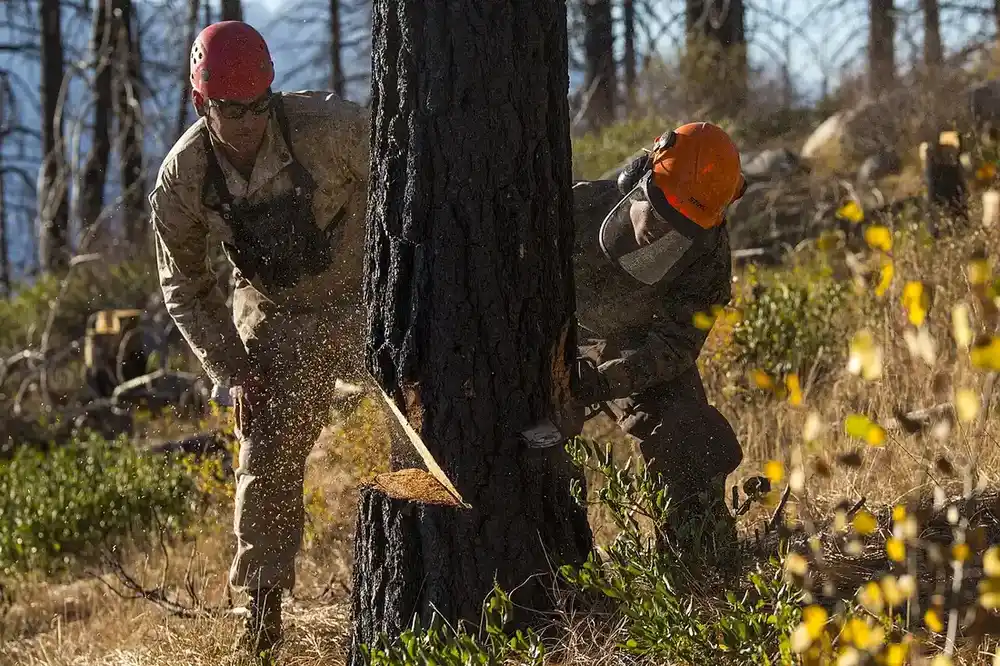
Limbs first, then the trunk in sections, each piece lowered or directed to the drop zone. Nothing falls that was not planned to fall.
Finish the site
Brush and wood handled as agreed, the stump ground or scheduled, and the ground raked back to a yard again.
Doing It Yourself vs a Professional
The DIY Route
- Felling a tree that leans toward the house, with a consumer saw, is how roofs get crushed in calm weather
- Cutting the trunk at the ground leaves the lean, the weight and the hinge all deciding at once
- Removing the 'easy half' of a split tree unbalances the half that remains - the half over the roof
VS
The Professional Route
- Reads the lean, the defects and the drop zone before quoting the method
- Rigs pieces down under control in tight lots instead of felling and hoping
- Finishes the job: wood, brush and stump handled as agreed, not abandoned
Keep It From Coming Back
A sound tree's worst enemy is the assumption that it needs nothing until it falls. The habits below keep removal a rare, planned event rather than a recurring emergency - and the first year's photographs of your young trees become the baseline every later assessment compares against.
- Have leaning, splitting and fungus-footed trees assessed while they are still standing on your schedule.
- Remove dead trees promptly - dead wood gets more brittle and less predictable every season it stands.
- Plant replacements away from roofs, lines and foundations so the next tree never becomes this problem.
- After major storms, get damaged trees read before deciding they 'survived' - survival and soundness differ.
- Keep the paperwork: the assessment and the removal record, for insurance and resale files.