When to Trim: A Kansas Tree Trimming Calendar
Late winter is the plains' great pruning window - dormant wood, visible structure, inactive disease beetles - but every species keeps one date of its own.
Read the Guide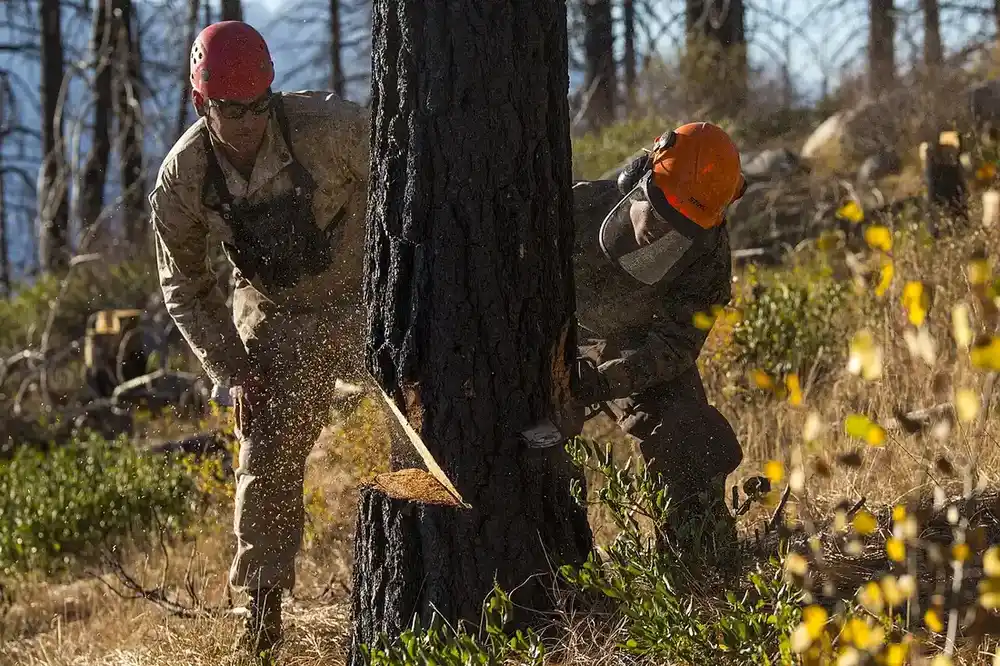
A removal figure is the sum of the tree's size, its condition, what stands under it, how equipment reaches it, and what happens to the wood - not a rate per tree.
Problem: A removal figure is the sum of the tree's size, its condition, what stands under it, how equipment reaches it, and what happens to the wood - not a rate per tree.
Solution: Get the scope in writing - method, wood disposition, stump standard - and compare scopes before totals; the bargain quote usually shrunk the scope, not the tree.
When to call: Call when the tree is dead, splitting, leaning or declined past treatment - removal scoped in calm weather, on your schedule, is the economical version of this job.
Ask three companies what a removal costs and you will get three numbers that cannot be compared - because each quietly describes a different job. One includes the stump, one does not; one hauls everything, one leaves the wood; one plans to rig a dead ash over your roof piece by piece, one has not looked at it. This guide lists the factors that actually compose a removal figure, so your quotes can be made to describe the same tree and the same finish before their totals are allowed to argue.
The tree stock matches the city's history: American elm and hackberry in the old neighborhoods, ash planted heavily in the boom decades, Bradford pears and silver maples planted for fast shade, and cottonwood, pecan and walnut timber along the river corridors. Each carries its own Wichita fate - the borer for the ash, the split for the pears, the shed limb for the cottonwoods - and the pages here are organized around exactly that.
Height, spread and trunk diameter set the job's weight class - literally: a removal is the controlled landing of several tons of wood, and the tonnage scales with the tree. Species enters through the wood: oak and Osage orange are dense and heavy; cottonwood is lighter per foot but arrives in enormous sizes; a dead ash is brittle and sheds pieces that living wood would hold, which changes the handling entirely.
Condition is the multiplier owners least expect. A sound tree can be climbed with confidence and cut in honest sections; a hollow, cracked or borer-killed tree cannot be trusted to hold a climber or a rigging line, so it comes down slower, smaller and sometimes only by lift or crane. The riskiest trees cost the most to remove - the standing argument for never letting a doomed tree wait for its price to improve. It will not.
What stands under and around the tree writes the method. An open-lot tree can be felled in one honest piece; the same tree over a roof, a line, a fence and the neighbor's greenhouse is a rigging exercise in which every section is lowered on ropes to a drop zone the size of a rug. Time is the cost, and targets multiply time - this is the factor that makes two 'identical' trees on the same street price differently.
Access prices the machines: can a lift reach the tree, can the chipper back to the brush, must every piece be hand-carried through a garden gate and down an alley? Wichita's postwar lots, with their fences and narrow side yards, make access the silent line in many quotes. A bidder who has not walked the access has not bid the job - they have bid the photograph.
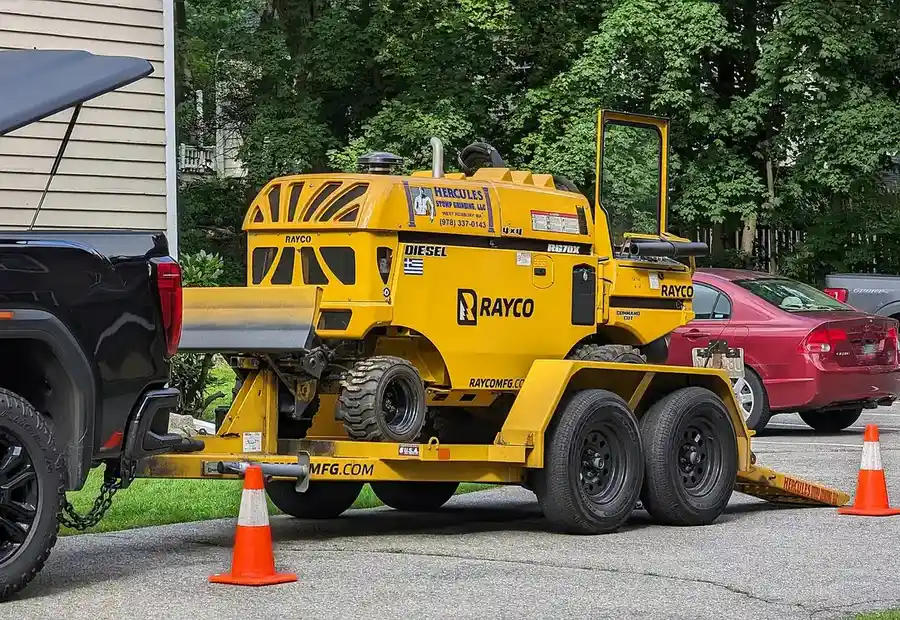
A removal ends where the contract says it ends, and the addresses vary: brush chipped and hauled, brush left as mulch; trunk wood hauled, or cut and stacked as your firewood; the stump cut flush, ground below grade, or fully removed. Each choice is legitimate and each moves the total - which is why a quote without a finish line is not a quote, it is a beginning.
The comparison discipline follows: put the finish in writing for every bidder - same method, same wood disposition, same stump standard - and then let the totals speak. Owners who do this discover that the wide spread in their quotes was mostly three different jobs wearing one name, and the remaining spread is the honest one worth choosing on.
Every owner collects the same three documents: one number with everything included and nothing itemized, one low number that quietly excludes the stump and the haul, and one careful scope that reads like a contract. They are not three prices for one job; they are three jobs. The translation work - forcing each bidder onto the same written scope - routinely collapses a confusing spread into a narrow, honest one, and reveals which bidder was describing your tree and which was describing a hope.
This is also why the per-tree 'going rate' question has no answer worth printing. Rates exist per factor - per foot of height, per target under the crown, per gate the chipper must thread - and a figure assembled from the factors of your actual tree is the only kind that survives contact with the work.
Some quotes carry a line owners do not expect: the crane. It arrives when a tree cannot be safely climbed (dead, hollow, borer-brittle) and cannot be felled (targets everywhere) - the crane lifts the pieces out vertically, in engineered picks, and its day rate is the honest price of a tree that waited past its climbable years. Reading a crane line in a quote is reading the tree's own condition report, signed by physics.
The crane is also the ledger's final argument for early decisions. The same tree, removed while it could still be climbed and rigged, is a rope-and-saw job at a fraction of the ceremony. Declining trees do not hold their prices; they compound them.
A removal is the one tree job that resets a site completely - shade, risk, root competition and all - which is why its timing matters so much. Done a season early, it merely trades a short remainder of hazardous life for a clean planting site. Done a storm too late, it arrives as an emergency with a roof in the invoice, and part of the budget goes to repairing the house instead of planting the successor.
That is the service side of this guide's subject. When you are ready, the Tree Removal page carries the process, the coverage by neighborhood and the number to call.
Be there: point out the targets, the access, the lines - and hear the method the bidder proposes for your actual tree.
Method, wood and brush disposition, stump standard, cleanup state - the same scope, given to every bidder.
Lay the written scopes side by side; where they differ, the cheaper total is usually describing the smaller job.
The crew whose plan you understood keeps the job - and the paperwork goes in the property file.
Get every quote on the same written scope - method, wood, stump, cleanup - before comparing a single total.
Ask each bidder how the tree comes down in your lot, specifically: rigged, lift, crane or felled.
Confirm the stump standard and the wood disposition as named lines, not assumptions.
Ask what changes the number if the tree turns out hollow - before the saw answers that question.
A professional removal scope names the tree and its condition findings, the takedown method matched to the targets, the rigging or machine plan, the disposition of brush and wood, the stump standard, the cleanup state of the finished site, and the total that buys exactly that list - nothing implied, nothing trailing.
It also names the exclusions honestly: what is not in the figure (a crane day if the tree proves worse than graded, stump excavation beyond the stated standard) and how each would be priced if it arrives - so the comparison you ran at the kitchen table survives the workday.
A professional removal quote is a scope that happens to end in a number: the tree identified, the method named, the targets acknowledged, the wood and stump dispositions stated, the cleanup standard written. Reading one teaches you your own job. The professional habit that signals the rest - the bidder walks the access and the drop zone before pricing, and the quote's arithmetic is visibly built from your tree's factors rather than from a rate card.
Comparing totals across different scopes - the classic way to overpay for less job.
Letting the stump ride as a verbal assumption; unnamed stumps are billed as surprises.
Choosing the bid that never visited - it priced a photograph and will re-price your tree on arrival.
Waiting for a declining tree to get cheaper; dead, brittle and crane-class only compounds.
A removal figure is a story about a tree, told in factors. Get the story in writing, make every bidder tell the same one, and the totals will finally be comparable - and the crew you choose will be the one whose reading of your tree you trusted. That reading is the job's true first day.
Late winter is the plains' great pruning window - dormant wood, visible structure, inactive disease beetles - but every species keeps one date of its own.
Read the GuideGrinding retires the stump below grade without tearing the yard apart - it answers most yards; removal evicts the whole root ball, and answers ground that must be provably clear.
Read the GuideBecause size is only the first factor. Targets, lean, condition and access each move the figure - your tree over the roof and the service line, reachable only through a gate, is a different job from your neighbor's open-lawn tree of identical height. The quotes are both honest; the trees' neighborhoods are not the same.
It is a separate job riding along: grinding below grade is its own machine and hour; full root-ball removal is excavation. Quotes that 'include the stump' and quotes that do not are describing different finish lines - the most common single reason removal quotes look incomparable. Name your stump standard before comparing anything.
Often, yes - hauling is trips and time, and trunk wood left cut-and-stacked skips both. Know what you are keeping: hardwood sections are next winter's fuel after splitting and seasoning; giant cottonwood rounds are a project. The saving is real when the disposition is chosen with open eyes and stated in the scope.
Usually the opposite. Dead wood is brittle, sheds unpredictably, and cannot always be climbed safely, which pushes the job toward lifts, cranes and smaller, slower pieces. The easiest removal a Wichita owner ever buys is the planned one of a tree that is declined but still structurally honest - one more entry in the long ledger of reasons to decide early.
One call connects you with a tree care professional serving Wichita and the surrounding communities - assessment, trimming, removal and cleanup.
📞 Call Now