Wichita Tree Services

Emergency Tree Service in Wichita, KS

Emergency tree service in Wichita - trees on roofs, limbs through lines and trunks across driveways made safe fast, with the storm damage documented while it is fresh.

Ice is the second force, and it is patient. The great Kansas ice storms load every limb with weight the wood never evolved to carry, and the failures they cause - split trunks, torn crowns, whole trees down - arrive in a single night across whole neighborhoods. Species with brittle wood and trees with included bark pay first, which is why the canopy's composition matters as much as its size.

The tree stock matches the city's history: American elm and hackberry in the old neighborhoods, ash planted heavily in the boom decades, Bradford pears and silver maples planted for fast shade, and cottonwood, pecan and walnut timber along the river corridors. Each carries its own Wichita fate - the borer for the ash, the split for the pears, the shed limb for the cottonwoods - and the pages here are organized around exactly that.

Signs You Need Emergency Tree Service

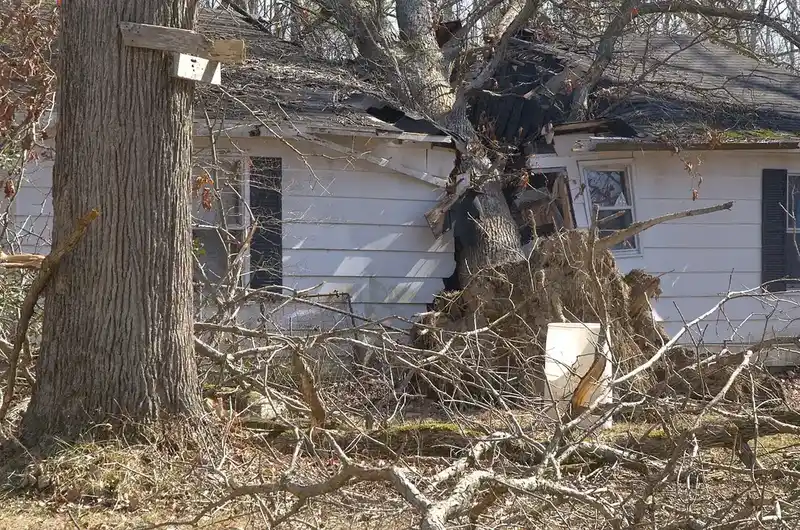
A tree or limb on the roof

Weight on a roof is a leak in progress and sometimes a structural question. It comes off by rigging, piece by piece - never dragged, never dropped the rest of the way.

A trunk split and opening

A split that creaks or widens in wind is a failure mid-sentence. Stay out from under it; the two halves are under loads that release without asking.

A tree leaning on the house or lines

A tree held up by a roof edge, a fence or the service line is a loaded spring with your address on it. Lines especially: treat any tree touching wires as energized until the utility says otherwise.

A hanger over a walkway or drive

A broken limb caught in the crown above where people walk is the classic emergency - it has already fallen once and chosen not to land. It does not send a second warning.

A root plate lifting out of the ground

Soil heaving and cracking on the side away from a lean means the tree is mid-fall on a slow fuse. That yard is closed until the tree is down or secured.

Storm debris blocking access

A drive, a door or a street blocked by a downed tree after a storm is logistics as much as hazard - access restored safely is part of the emergency job.

Why Emergency Tree Service Is a Standing Job in Wichita

Wichita's emergencies arrive on the storm calendar: the spring supercell that twists a crown past its balance, the ice night that loads every weak union past its limit, the drought-weakened root plate that lets go in a routine gust. The tree that falls was usually readable months earlier - the emergency is the bill for the reading that did not happen.

The work itself is load management. A limb on a roof may be carrying hundreds of pounds resting on a pivot; cut in the wrong order, the pieces roll, drop or spring - the reason emergency crews rig before they cut, and cut small. Speed matters, but sequence matters more: the fastest safe removal beats the fastest removal every time.

Documentation rides along with the saws. Storm damage has an evidence clock - insurers, neighbors and the city all read the scene best in the first days - so photographs of the tree as found, the damage it did, and the work performed are gathered as the job runs. That file is part of the deliverable, not a courtesy.

Emergency Tree Service Through the Wichita Year

Summer splits in two: the storm tail of June and early July, when late cells still tear at crowns, and the long bake that follows, when drought stress shows first in the trees planted in tight soil and parking-lot islands. Most storm damage is discovered in summer - the storm did the work in spring, and the failures report as the heat and wind finish them. Deep watering of young trees is the season's quiet essential.

Fall is the assessment and planting window. The severe season is past, the canopy shows its true structure as the leaves thin, and there is time to cable what can be kept, remove what cannot, and plant replacements while the soil is still warm. It is also when honest tree work happens, because a bare-crowned tree hides nothing from an arborist.

Spring is storm season in Wichita, and it is tree season too. From March into June, supercell thunderstorms roll off the plains with damaging wind, and the trees that get a structural look before the season are the ones that come through it standing. Late spring is also when winter's hidden damage declares itself - limbs that died under ice, crowns that leaf out thin, and borers resuming their work in the ash.

Emergency Tree Service in Depth

Emergency work has an evidence clock that planned work does not. Splits settle, torn bark dries, helpful family members drag the limbs to the curb, and within days the tree's story of the storm is much harder to tell. Insurance timelines formalize what physics already enforces: the scene must be documented early, with dated photographs, while the storm's signature is still legible on the wood and the roof.

The second clock is honesty about states. A tree resting on a roof is an emergency; a tree lying flat in an empty yard is a cleanup with no clock but the owner's patience. Crews that triage honestly - racing to the first, scheduling the second - protect both the homeowner's house and the homeowner's wallet, because emergency arithmetic applied to a patient job helps nobody but the invoice.

Choosing the Right Help

Choosing in an emergency is choosing under pressure, so choose on evidence of method: the crew that asks what the tree is resting on, whether lines are involved, and where the people are - before it quotes - is running a triage. The crew that quotes from the curb is running a guess. Photographs of their storm work and a written account of yours afterward are the other markers; ask for both, even at 2 a.m.

The Climate Behind It

Wichita sits on the central Kansas plains where the Arkansas and Little Arkansas rivers meet, and plains weather writes the tree calendar here: spring severe storms with damaging wind, winters that deliver canopy-breaking ice, and long summer droughts broken by downpours. A tree in Wichita is not tested by one climate - it is tested by all of them, in turns, every year of its life.

Wind is the signature force. Kansas wind works at trees day after day - flagging crowns, fatiguing weak unions - and storm outflows arrive with gusts that collect on whatever the daily wind loosened. A tree's structure, built by its pruning history or its neglect, is its real storm rating, whatever species the tag said.

How Emergency Tree Service Works

Make the scene safe

First the triage: people and pets out of the fall zone, utilities flagged if lines are involved, and the load read before anyone steps under it.

Take the weight off

The pieces on the roof, the car or the lines are rigged and lifted or lowered in sections, so nothing secondary breaks on the way down.

Bring the tree to stable

The remainder is reduced to a state the next storm cannot finish - or taken down entirely if the damage has already decided for it.

Document and plan the finish

Photos and a plain-language account of what happened and what was done, plus the plan for the stump, the cleanup and any trees the same storm exposed.

Doing It Yourself vs a Professional

The DIY Route

  • Cutting a limb that is resting on a roof releases weight in directions nobody standing on that roof controls
  • Pulling a downed tree with a vehicle drags root plates, lines and fences into the argument at once
  • Working anywhere near a tree that touches a power line is not bravery - treat it as energized, full stop
VS

The Professional Route

  • Triages before cutting: loads, lines and people, in that order, every time
  • Rigs emergency pieces down instead of letting gravity finish its idea
  • Documents as it works, so the insurance conversation starts from evidence

Keep It From Coming Back

Emergencies cannot be scheduled, but they can be prepared for. The steps below are the difference between a storm that costs a cleanup and a storm that costs a roof - most of them take minutes, in calm weather, before they are ever needed.

  • Never walk under a hanger, a split trunk or a leaning tree to 'get a better look' - the look is the risk.
  • Photograph storm damage as found, before anything is moved - that is the file every later conversation reads.
  • Keep the emergency number saved before storm season; the busiest phones in Kansas belong to the week after the storm.
  • Have the readable hazards - dead tops, split unions, growing leans - handled in the calm seasons, when they are pruning jobs instead of emergencies.
  • After ice, wait for the melt before judging a bent tree; some recover, and the dangerous ones declare themselves as they unload.
Emergency Tree Service in the Surrounding Communities

The communities around Wichita share its storm tracks and its ice - with their own twists of storm history, acreage timber and open-country wind.

Emergency Tree Service in Clearwater

Clearwater is a small railroad-era city southwest of Wichita on the Chikaskia River, with a historic downtown and a mix of older homes and new subdivisions drawing commuters to the metro. Its older streets keep a small-town canopy of elm and hackberry planted generations back.

Emergency Tree Service in Mulvane

Mulvane is an old railroad town south of Wichita on the Arkansas River, with a preserved Main Street and depot, newer growth near the Kansas Star Casino, and a strong small-city identity. The river's bottomland timber frames the town on its low sides.

Emergency Tree Service in Rose Hill

Rose Hill is a growing Butler County town southeast of Wichita, where newer subdivisions and acreage homes have spread around its schools. It draws families who want country space within commuting range - and its trees split between new plantings and old farm timber.

Emergency Tree Service in Bel Aire

Bel Aire is a growing city on Wichita's north edge, built around lakes, parks and newer subdivisions along the K-254 corridor. It has grown from a small community into one of the metro's active family suburbs, planting its canopy as it goes.

Where Emergency Tree Service Is Needed Most

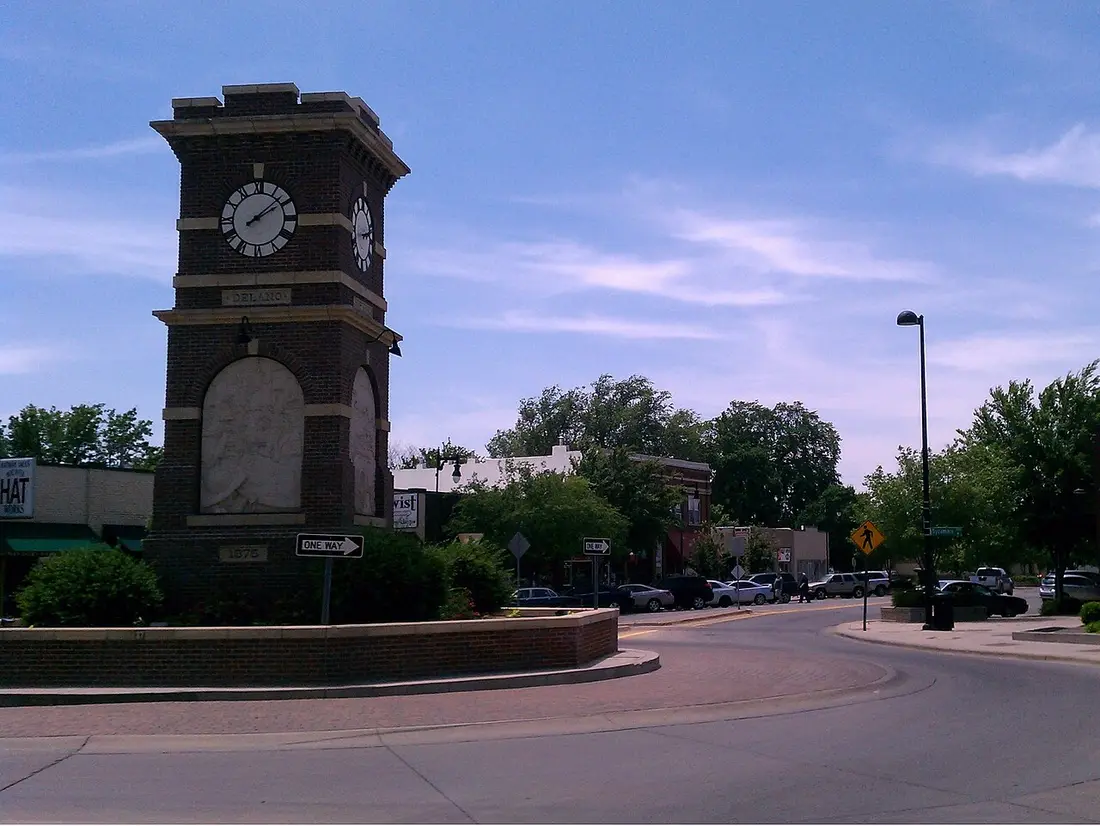
In the historic core and the east side - Riverside, College Hill, Eastborough, Downtown Wichita, Old Town and Delano, Midtown, South Wichita, Planeview, Oaklawn - the canopy runs from Wichita's oldest planted elms and oaks to the boom-decade ash and pear of the postwar subdivisions, and emergency tree service follows that record: heritage structure work on the older streets, species failure calendars in the subdivisions, and wind exposure that grows toward the open edges.

Across the east and west growth sides and the north side - East Wichita, Northeast Wichita, Uptown Wichita, West Wichita, Southwest Wichita, Auburn Hills and North Wichita, Benjamin Hills, Northwest Wichita, Derby, Andover, Haysville - sit the subdivision waves of the 1970s onward, the growth-edge neighborhoods and some of the county's busiest storm tracks, which together make this the steadiest emergency tree service territory in the city.

Beyond the city line, the same work runs in Clearwater, Mulvane, Rose Hill, Bel Aire, Park City, Valley Center, Kechi, Maize, Goddard, Newton, Hutchinson - railroad towns, fast-growing suburbs and county-seat communities where acreage timber, shelterbelts and open-country exposure add their own chapters. Every one of these area pages carries the local detail for emergency tree service in that community.

Coverage, In Full

Emergency Tree Service runs across the whole service map: Riverside, College Hill and Eastborough; Downtown, Old Town, Delano and Midtown; East Wichita, the northeast growth edge and Uptown; South Wichita, Planeview and Oaklawn; the west side, Southwest Wichita and Auburn Hills; North Wichita, Benjamin Hills and Northwest Wichita; and beyond the city in Derby, Andover, Haysville, Clearwater, Mulvane, Rose Hill, Bel Aire, Park City, Valley Center, Kechi, Maize, Goddard, Newton and Hutchinson. One call covers all of it - the local pages above carry the detail for each. If your street is not named here, call anyway: routes grow with demand, and most Sedgwick County addresses are already within reach of a scheduled run.

From the Wichita Tree Guides

Signs a Tree Is Dying: A Wichita Homeowner's Checklist

Trees announce their decline in order: the crown thins and shortens first, the trunk shows seams and fungus, the base tells the final truth - most owners read the list backwards. Stress is reversible and dying is structural; the checklist separates them, and the single best test is comparison - the tree against its own photographs from two years ago.

Read the Guide

After the Storm: A Wichita Guide to Storm-Damaged Trees

Storm damage keeps unfolding after the sky clears: hangers fall, splits open, and root plates settle for days - the first walk should be a look, never a cleanup. Work the order: safety and lines first, photographs of everything as found, hazards handled by crews, and the standing trees assessed before any verdicts get casual.

Read the Guide

How Long Do Trees Live in Kansas?

The same species lives decades less in Kansas than in a calm climate - wind load, ice storms and drought spend a tree's life faster than time alone ever will. Know each species' realistic range, grade your trees by structure and health rather than birthday, and plan renewals and successions as the mid-life events they are.

Read the Guide

Emergency Tree Service Questions

How fast can emergency tree work start in Wichita?

Storm weeks reorder every schedule in the city, and honest crews triage: trees on homes and lines first, blockages next, yard cleanup last. The call itself sets your place in that order - describe exactly what the tree is on or threatening, and the triage can do its work.

What should I do before the crew arrives?

Keep everyone - including the curious - out of the fall zone, move cars that can be moved safely, secure pets indoors, and photograph the scene from safe ground. Do not cut, pull or climb anything. If lines are down or involved, treat the whole area as energized and wait for direction.

Does emergency work include hauling the tree away?

The emergency scope is safety: weight off, hazard down, scene stable. Hauling and full cleanup follow as scoped work - sometimes the same visit, sometimes the planned second pass. You will know which before the crew leaves, and the wood's disposition (hauled, stacked, left) is your choice to make then.

What affects the cost of emergency tree work in Wichita?

What the tree is resting on, how much of it must be rigged against its own weight, line involvement, access in the dark or the mud, and how much of the tree the damage has claimed. Emergency arithmetic is heavier than planned arithmetic - one more reason the calm-season assessment is the bargain of this trade.

My Wichita tree fell on the roof. What happens first?

People and safety first, then the load: the crew reads how the tree is resting, rigs the pieces, and removes the weight in sections so the roof takes no second injury. The tree work and the documentation run together. Roof repair itself belongs to roofers - the tree crew's finish line is a safe, tree-free structure and a clean account of the damage.

Is a tree touching power lines in Wichita an emergency?

Treat it as one and touch nothing. Call it in, keep people and pets away, and let the utility make the line safe - tree crews work around energized lines only within their specific training and the utility's direction. A tree in the service drop to your house is still a tree in a wire; the calm phone call is the whole correct first move.

The storm was last night - is my Wichita tree still an emergency today?

If it is on something, leaning on something, split, hanging or blocking, yes - those states do not stabilize themselves, and the next gust grades them again. Merely damaged trees - torn crowns, lost limbs, on the ground clear of targets - can wait for a daylight assessment and a planned cleanup.

Will the emergency crew in Wichita take the whole tree?

They will take it to safe, which sometimes is the whole tree and sometimes is the failed portion with the remainder left standing and sound. You hear the reasoning either way: what the damage did to the tree's structure decides how much of it can honestly stay.

Please note: Wichita Tree Service is an independent directory and referral service, not a tree service contractor. The professionals reachable through this site are independent businesses; any agreement for work is between you and the professional you engage. Service information on this site is general educational material - the scope of any real tree work is set by an on-site inspection.

A Dead Limb Over the Roof, a Leaning Trunk or Storm Debris in the Yard?

One call connects you with a tree care professional serving Wichita and the surrounding communities - assessment, trimming, removal and cleanup.

📞 Call Now
📞 Call Now