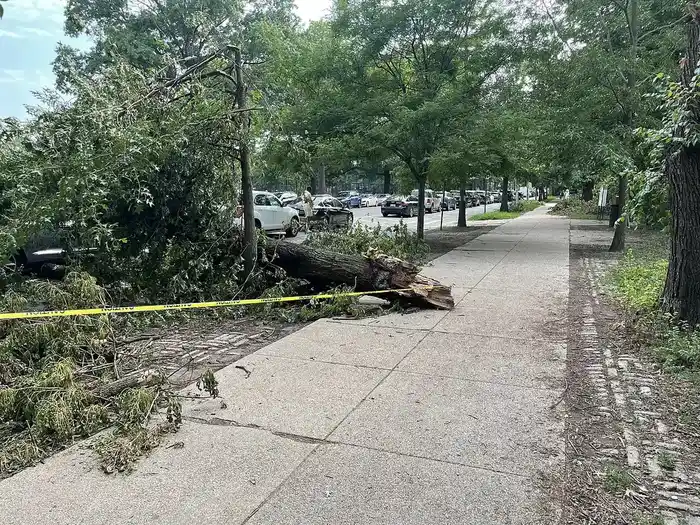
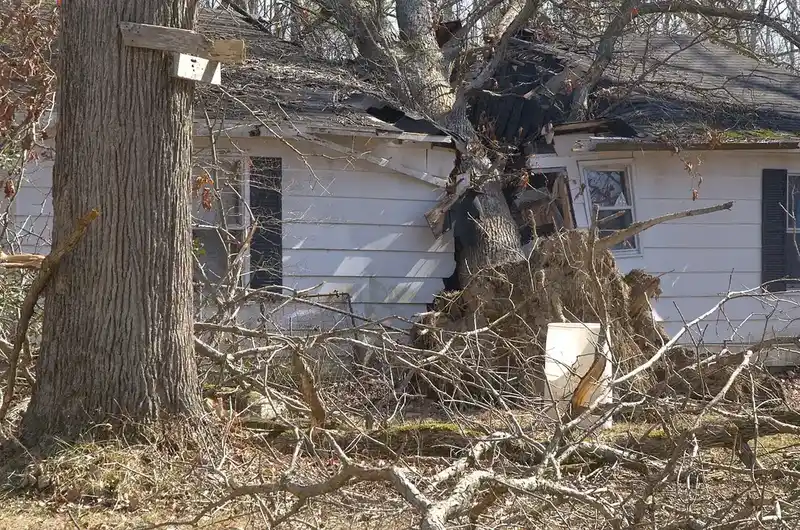
Storm damage keeps unfolding after the sky clears: hangers fall, splits open, and root plates settle for days - the first walk should be a look, never a cleanup.
Problem: Storm damage keeps unfolding after the sky clears: hangers fall, splits open, and root plates settle for days - the first walk should be a look, never a cleanup.
Solution: Work the order: safety and lines first, photographs of everything as found, hazards handled by crews, and the standing trees assessed before any verdicts get casual.
When to call: Call immediately for anything on a structure or line, any hanger over a target, any split trunk or lifted root plate - and for the survivors' assessment within the first weeks.
Every Wichita homeowner eventually walks a yard the morning after - coffee in hand, surveying a crown in the driveway and a sky that looks innocent. What happens in the next two days decides more than the storm did: whether the insurance conversation starts from evidence, whether the damaged tree that could have been saved gets saved, and whether anyone gets hurt by the storm's second act. This guide is the order of operations.
The Wichita Angle
Wind is the signature force. Kansas wind works at trees day after day - flagging crowns, fatiguing weak unions - and storm outflows arrive with gusts that collect on whatever the daily wind loosened. A tree's structure, built by its pruning history or its neglect, is its real storm rating, whatever species the tag said.
The Safety Order Comes First
Before photographs, before plans: look up. The storm's most dangerous products are still in the trees - broken limbs caught in crowns, splits under load, trunks resting on structures and wires. Treat any tree touching a line as energized, keep everyone out from under hangers, and do not let helpful relatives with ladders improve the situation. The storm hurt the yard; the cleanup is where it hurts people who rush it.
Then walk the perimeter like an inspector, not an owner: photograph every tree as found, every point of damage to structures, the lean that was not there last week, the soil lifted at the base. Wide shots and close shots, dated automatically by the phone in your hand. This file - made in twenty minutes - is what every later conversation (insurer, crew, neighbor, city) will run on.
Reading the Damage: Four Verdicts
Saveable as-is: trees that lost limbs cleanly, without trunk splits or root movement. They need corrective pruning - the torn stubs cut back to collars so the tree can close the wounds - and then they need to be left alone to do it. Most storm damage in most yards is this verdict, which is why the rush to remove is usually wrong.
Saveable with work: the split that can be braced, the crown that can be rebalanced by reduction, the lean that is old and stable. Lost: the trunk split through its heart, the root plate out of the ground, the crown gone past its balance. And the deceptive fourth verdict - looks fine, is not: the union that cracked and closed, the root plate that lifted and resettled. That verdict is only readable by assessment, which is why the standing trees get one.
PROBLEM
→
SOLUTION
The Cleanup Sequence That Works
Hazards first, while everyone is fresh: hangers down, split trees secured or removed, access restored. Then the downed wood, cut bind-aware - a fallen trunk rests on its limbs like a set of loaded springs, and each cut changes the balance of the rest. Owners with saws should hear this plainly: storm-downed wood is the most dangerous cutting in the trade, and the ground is full of weekend evidence.
Last, the decisions with long shadows: the stumps, the gaps, the replanting. Storm week tempts owners to clear-cut their grief; the better sequence leaves every standing tree's verdict in writing first, then removes by the document. The yard you keep is the one the assessment described, not the one the loudest week of the year improvised.
Why Neighbors Get Different Verdicts
Two adjacent trees can honestly earn opposite storm verdicts, and the reasons are structural: the gust's core can cross between the houses; one tree is a trained oak and the other a topped maple; one stands sheltered by the street's windbreak and the other takes the corner lot's full fetch. Storm verdicts that respect those variables look inconsistent from the sidewalk and are consistent in the canopy.
This is also why 'the whole street is removing theirs' is evidence but not proof for your address. It proves the storm carried real force to your street. What it did to your tree, at your tree's condition, is a separate measurement - and it is the measurement, not the street's consensus, that your scope should follow.
The Splits and What They Mean
The cracks that appear in crowns after storms are an arborist's map: unions marked, loads coded. They are a working language, and like any language they can be read honestly or theatrically. A split measured, photographed and located in the tree's structure is a scope's foundation; a split gestured at from the ground, without a climb or a close read, is decoration.
Homeowners can ask one clarifying question that separates the two: 'show me the seam and tell me what is holding it.' A real assessment answers it in the tree's own terms. Treat the answer - or its absence - as the assessment's true executive summary.
Myth vs Fact
The Myth
If a storm did not knock the tree down, the tree is undamaged. The standing standard belongs to calm imaginations; real storm damage hides inside unions and under bark.
VS
The Fact
Functional storm damage is the crack you read, not the fall you saw. Unions part, root plates lift and resettle, and crowns twist into new weaknesses that declare themselves next season. The assessment after the storm, not the view from the porch, is the verdict.
The Related Service, In Depth
Cleanup has a hidden curriculum: the storm graded every tree on the property, and the cleanup survey is the only scheduled reading of the grades. Split unions that held, crowns twisted into new balances, root plates that lifted and settled back - each is a finding with a timeline attached. Owners who get those findings in writing convert one storm's damage into the next decade's plan; owners who get only a clean yard get to be surprised on schedule.
That is the service side of this guide's subject. When you are ready, the Storm Damage Cleanup page carries the process, the coverage by neighborhood and the number to call.
The Process, Step by Step
Secure the scene
People and pets clear of hangers, splits and lines; treat wire contact as energized; no ladders, no heroics.
Photograph everything as found
Every tree, every structure strike, every lean - wide and close, before a single branch is moved.
Triage with a crew
Hazards handled first; get the standing trees' verdicts in writing at the same visit.
Decide from the document
Removals, corrective pruning, stumps and replanting - chosen from the assessment, not from storm-week adrenaline.
Prevention Checklist
Keep a tree file before the storm: species, ages, photos in leaf - the before pictures double the after file's value.
Run the calm-season pass every few years: deadwood, weak unions and hangers are storm claims in rehearsal.
Save the emergency number in spring, not during the storm - the busiest week in Kansas tree work is the one after.
Know your lines: which are the utility's, which are yours, before a tree ever leans on one.
Resist the same-week total cleanup; hazards fast, verdicts careful.
A Field Checklist for Your Own Home
Photograph the whole property before touching a branch - the file is the claim.
Keep every person and pet out from under hangers until a crew clears them.
Ask any assessor for verdicts per tree, in writing: keep, correct, monitor, remove.
Save the storm's date with the report; undated damage findings age into opinions.
What the Paperwork Should Show
A storm assessment worth its name delivers the property's damage map: every tree's verdict with photographs, the hazards ranked in work order, the survivors' corrective pruning listed, and the documentation package - as-found photos and the scope logic - that the insurance conversation and the cleanup conversation can both run on.
It also delivers the sequence: what happens in the emergency pass, what follows in cleanup, and what is deliberately left on a watch list with dates - so the loudest week of the year does not get to improvise your canopy's next decade.
How a Professional Works This Problem
A professional storm assessment works from the top of the risk list down: hangers and splits first, then the standing trees' structural verdicts, each photographed and located, with a written order of work that separates the emergency from the cleanup from the watch list. That document is what the insurer reads, what the crew prices, and what the owner decides from - three conversations, one piece of paper, no adjectives doing arithmetic's work.
Mistakes That Make It Worse
Cutting into downed trunks without reading the bind - storm wood under tension is the trade's first injury story.
Topping the survivors 'to balance them' - the regrowth is the next storm's weakest wood.
Skipping the standing trees' assessment because the fallen ones are louder.
Moving the evidence before photographing it - the claim file cannot be rebuilt from memory.
The Bottom Line
Storms will keep their Wichita appointments whether trees are read or not. The homeowners who come out of storm seasons whole are the ones whose trees were assessed while the evidence was fresh - and whose decisions were made from a document, not from adrenaline. If the sky has just finished with your street, the read is already worth booking.
Grinding retires the stump below grade without tearing the yard apart - it answers most yards; removal evicts the whole root ball, and answers ground that must be provably clear.
The same species lives decades less in Kansas than in a calm climate - wind load, ice storms and drought spend a tree's life faster than time alone ever will.
A limb is hanging in my tree but not falling. How urgent is it?
It is the most urgent item in the yard. A hanger has already fallen once and been caught; gravity is patient and the next wind is its appointment. Keep people and pets out from under it entirely and have it brought down by a crew with ropes - it is a small job now and a complete accident report later.
My tree lost a big limb but looks fine otherwise. Does it need anything?
Yes - one specific thing: the torn wound cut back properly. Storm tears leave ragged stubs and ripped bark that the tree cannot close; a collar cut converts the wound into one it can. Beyond that, the crown's new balance gets a look - a tree that lost a third of one side has new wind mathematics.
The city says the tree in the easement is mine to clean. Is that right?
Easement and street trees run on local rules that mix ownership and maintenance duties, and they vary by exactly where the trunk stands. Photograph and document first (that part is universal), then let the survey and, if needed, the city forester's answer decide the responsibility - crews can work the wood either way once the question is settled.
Should I top the damaged crown to 'help it recover'?
No - topping a storm-damaged tree adds a permanent structural injury to a temporary one. The torn ends are cut back to sound laterals, the remaining crown is reduced where balance requires, and the tree rebuilds from proper cuts. It looks less dramatic than topping for exactly one season, and safer for the following thirty years.
Please note: Wichita Tree Service is an independent directory and referral service, not a tree service contractor. The professionals reachable through this site are independent businesses; any agreement for work is between you and the professional you engage. Service information on this site is general educational material - the scope of any real tree work is set by an on-site inspection.
A Dead Limb Over the Roof, a Leaning Trunk or Storm Debris in the Yard?
One call connects you with a tree care professional serving Wichita and the surrounding communities - assessment, trimming, removal and cleanup.