After the Storm: A Wichita Guide to Storm-Damaged Trees
Storm damage keeps unfolding after the sky clears: hangers fall, splits open, and root plates settle for days - the first walk should be a look, never a cleanup.
Read the Guide
Grinding retires the stump below grade without tearing the yard apart - it answers most yards; removal evicts the whole root ball, and answers ground that must be provably clear.
Problem: Grinding retires the stump below grade without tearing the yard apart - it answers most yards; removal evicts the whole root ball, and answers ground that must be provably clear.
Solution: Decide by the ground's next job: lawn and beds take grinding; foundations, pools, and an exact-footprint replanting take removal - everything else is taste and budget.
When to call: Call when the tree is being scoped - the stump decision made with the removal, in one written scope, is the version without surprises.
Every felled tree leaves the same orphan question in the yard, and every owner eventually asks it in the same words: grind it, or dig it out? The two methods answer differently than their names suggest - grinding removes more than skeptics expect, removal disturbs more than romantics imagine - and the right choice is made by the ground's future, not by the stump's present. This guide lays the two side by side, with the five situations that decide it outright.
Wind is the signature force. Kansas wind works at trees day after day - flagging crowns, fatiguing weak unions - and storm outflows arrive with gusts that collect on whatever the daily wind loosened. A tree's structure, built by its pruning history or its neglect, is its real storm rating, whatever species the tag said.
Grinding is subtraction by machine: a toothed wheel chews the stump and its flared base down in passes, typically six to twelve inches below the surface, chasing the near roots that lift walks and blister mower blades. The root system beyond stays in the ground, where it rots quietly over years and feeds the soil on its way out. The yard's disturbance is a shallow pit of chips and one machine's visit through the garden gate.
Removal is excavation: the soil comes off the root plate, the structural roots are cut in sequence, and the whole underground architecture - plate, flare and major laterals - leaves on a truck. What remains is a hole the size of that architecture and a backfill job to match. The ground is then genuinely wood-free, provably, to the full depth a foundation or a pool shell cares about - and the yard has hosted a dig to get it.
Construction decides for removal: anything with a footing, a slab, a shell or a buried line cannot share its ground with a buried root ball that will spend a decade rotting and settling. Replanting in the exact footprint decides the same way - a new tree deserves clean soil, not a chip-filled fungus garden. Utility surgery through the root mass decides it a third time: the excavation is happening regardless.
Everything else defaults to grinding, and the default is strong. Lawn, beds, fences, future planting at any modest offset, even a patio on a proper base - all thrive over a ground stump. The spongy-spot and sucker complaints that send owners shopping for removal are usually answered by deeper grinding and honest pit finishing. Which is why the professional conversation starts with 'what does this ground do next?' - the stump is the same in both futures; only the ground's answer changes the tool.
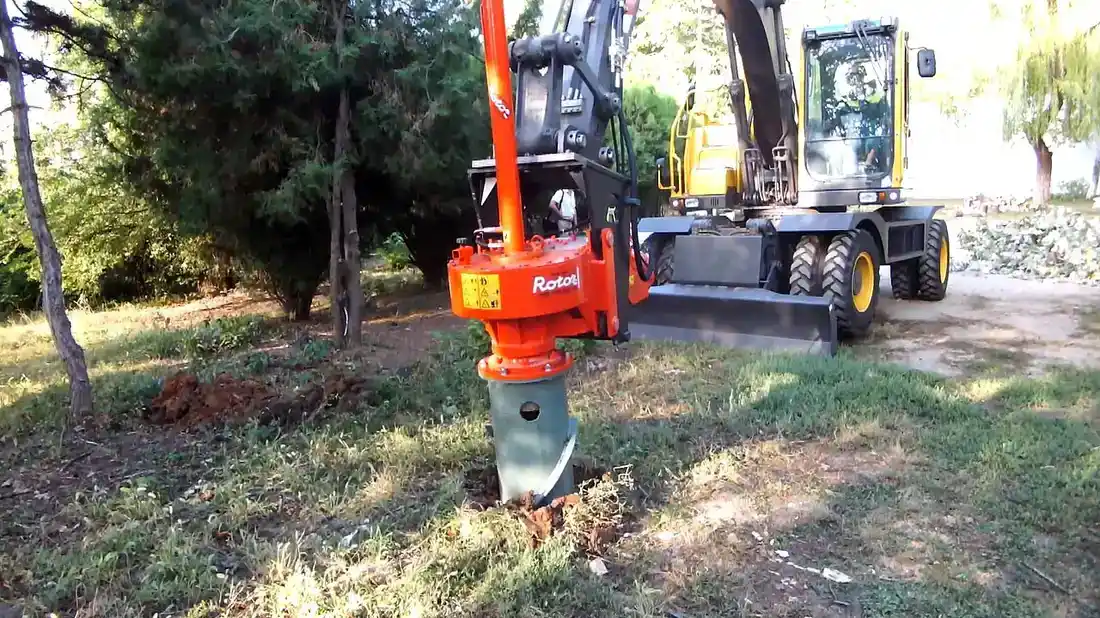
Grinding is the smaller job by every measure: one machine, a fraction of the day, the lawn intact at supper. Removal is earthwork: machines, trucking, backfill in compacted lifts, and a settling allowance afterward. Neither is a luxury version of the other - they are different deliverables - and quoting one against the other without naming the ground's next job is how owners end up buying a crater for a lawn, or a settling slab for a foundation.
There is a third option worth dismissing in print: doing nothing, dressed as patience. A kept stump is a decade of suckers, fungus, ants and mower diplomacy. It is occasionally the right answer for a back-corner stump in a naturalized area, where it becomes habitat and a gardening seat. Everywhere else it is the most expensive option on the page, paid in installments of weekends.
The deferred stump has a biography owners know by heart: year one, a mowing nuisance; year two, a sucker thicket with a fungus garnish; year three, the carpenter ants' embassy and the trip that finally makes the decision. Against that biography, the same-visit grind - the machine already mobilized, the scope already written - is the easiest chapter the stump will ever offer.
This is also why the stump belongs in the removal's written scope rather than in a later conversation: priced inside the job, it is a line item; priced alone a season later, it is a callout, a minimum and a second Saturday. The written scope is where the saving lives.
Owners picturing 'digging out the stump' picture the trunk's base; the excavation reveals the architecture: a root plate wider than a car, soil-bound, weighing what a car weighs. That mass is why removal is earthwork and priced like it, why its hole is the size it is, and why the methodical cut-in-sequence release - not the heroic yank - is how professionals are still employed at the end of the week.
It is also why removal is chosen with respect for its rarity. Ground that truly needs it deserves it completely; ground that does not is being sold a crater at excavation prices. The honest bidder's first move is to argue the grinding case in your own yard - and to lose the argument only to a foundation plan, a pool shell or an exact-footprint oak.
Grinding rewards owners who think in finishes. The same stump can be a six-inch lawn grind, a deep plant-ready excavation of chips, or a full chase of the surface roots lifting the walk - three different jobs with three different clocks, all called by one name. The honest conversation starts with what the ground does next, because the depth that serves a lawn wastes money under a patio, and the depth that serves a patio is not a luxury under a lawn.
That is the service side of this guide's subject. When you are ready, the Stump Grinding page carries the process, the coverage by neighborhood and the number to call.
Lawn, bed, build, or replant - this single answer sorts nine cases out of ten before any machine is discussed.
Depth and root-chasing for the grind; plate, backfill and finish for the removal - same standard from every bidder.
Grinding for lawns and beds and offset replanting; removal for foundations, pools and exact footprints.
Grindings settled, soil topped, the spot planted or seeded in the same plan - not left as a shrine to the decision.
Decide the stump inside the removal's written scope, never as a sequel.
State the ground's next job to every bidder and make them price to it.
Get the depth number for grinds and the backfill standard for removals, in writing.
Photograph the utility locates before the work and keep them with the invoice.
A professional stump scope states the method and its measure: for grinding, the depth below grade, the surface roots included, and the disposition of the grindings; for removal, the plate's extraction, the hole's backfill standard in compacted lifts, and the finished grade - each inspectable against the ground when the crew leaves.
It also states the exclusions in plain terms: roots beyond the named chase, settlement top-ups after the first season, and the line where stump work ends and construction excavation begins - so the comparison between methods is a comparison of deliverables, not of salesmanship.
A professional stump consultation starts with the ground's biography and its future: what stood here, what stands planned, what the soil must prove. From those answers the method chooses itself, and the scope states it - depth, root chasing, backfill standard, chip disposition - so the finished spot can be inspected against the promise. The professional tell is the bidder who argues for grinding in a lawn case and for removal in a foundation case with equal conviction: the tool follows the ground, not the truck's inventory.
Buying removal for a lawn out of thoroughness - a crater's price for a grind's result.
Grinding shallow under a planned patio and letting the pavers discover the difference.
Leaving the stump 'for now' - the sucker-and-fungus biography starts immediately.
Comparing a grind quote with a removal quote as if they were bids on the same deliverable.
The stump does not care which method you choose; the ground does. Name the ground's next job honestly, buy the method that serves it, and the last chapter of the tree closes in a day - instead of standing in the yard for a decade, collecting installments.
Storm damage keeps unfolding after the sky clears: hangers fall, splits open, and root plates settle for days - the first walk should be a look, never a cleanup.
Read the GuideThe same species lives decades less in Kansas than in a calm climate - wind load, ice storms and drought spend a tree's life faster than time alone ever will.
Read the GuideThe stump and root crown are destroyed, so the tree's engine is gone. Some determined species - elm, hackberry, locust - throw suckers from outlying roots for a season or two; mowing and clipping exhaust them as the orphaned roots run out of savings. A fully removed stump cannot sucker at all, which occasionally matters for the worst thicket-formers in a formal bed - one of the few taste cases where removal earns a look.
Possibly, and honestly: a patio on a proper compacted base tolerates deep soil fine, but a root ball rotting at shallow depth under pavers will eventually print its settling through. If the stump was ground shallow and sits inside the patio's footprint, the careful answer is excavation of the footprint before the base goes down - cheaper this month than after the pavers are laid.
Grass, almost immediately: rake the chips, top with soil, seed. The spot settles a little across the first season as the chips below decompose - a wheelbarrow of soil is the whole maintenance plan. A new tree goes a few feet to the side into honest soil, where its roots start clean; the offset is measured in feet and buys the tree decades.
Grinding itself is below-ground subtraction and moves nothing anywhere. The caution runs the other way: chips from a diseased tree used as mulch under its stressed relatives is the questionable move, and wood of any kind from borer or wilt ground should not travel off the property. The crew that grinds your diseased elm should also be able to tell you where its chips may and may not go.
One call connects you with a tree care professional serving Wichita and the surrounding communities - assessment, trimming, removal and cleanup.
📞 Call Now