Storm Damage Cleanup Through the Wichita Year
Wichita winters swing: bright mild weeks, then an ice storm or a hard freeze. Ice loads limbs past their breaking weight, frozen wood turns brittle, and the trees with split unions and dead tops are the ones that come down. Winter is the best pruning season here - structure is visible, disease pressure is low, and the trees read in winter get fixed before the spring storms interview them.
Summer splits in two: the storm tail of June and early July, when late cells still tear at crowns, and the long bake that follows, when drought stress shows first in the trees planted in tight soil and parking-lot islands. Most storm damage is discovered in summer - the storm did the work in spring, and the failures report as the heat and wind finish them. Deep watering of young trees is the season's quiet essential.
Spring is storm season in Wichita, and it is tree season too. From March into June, supercell thunderstorms roll off the plains with damaging wind, and the trees that get a structural look before the season are the ones that come through it standing. Late spring is also when winter's hidden damage declares itself - limbs that died under ice, crowns that leaf out thin, and borers resuming their work in the ash.
Storm Damage Cleanup in Depth
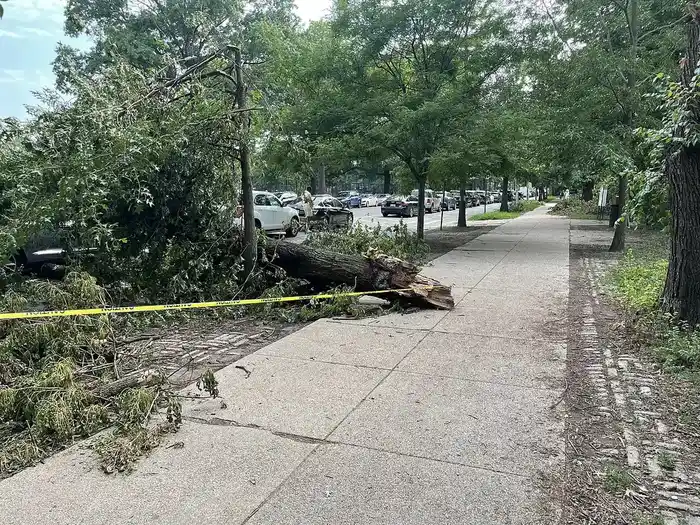
Cleanup has a hidden curriculum: the storm graded every tree on the property, and the cleanup survey is the only scheduled reading of the grades. Split unions that held, crowns twisted into new balances, root plates that lifted and settled back - each is a finding with a timeline attached. Owners who get those findings in writing convert one storm's damage into the next decade's plan; owners who get only a clean yard get to be surprised on schedule.
The replanting decision rides on the same survey. Storm gaps are the canopy's succession moments - the chance to replace the pear that split with an oak that will not, to move the line of trees off the roof line and the service line, to plant the windbreak where the storm proved it was needed. Cleanup that ends with a planting thought is worth more than cleanup that ends with a bare, swept yard and the same exposures it had in April.
Choosing the Right Help
Cleanup bids turn on the survey. Choose the crew that walks the whole property - standing trees included - before the number, and that separates the work into hazards, wood processing and survivor care in writing. A single lump figure for 'cleanup' hides the only question that matters later: whether the trees still standing were ever actually read.
The Climate Behind It
Wichita sits on the central Kansas plains where the Arkansas and Little Arkansas rivers meet, and plains weather writes the tree calendar here: spring severe storms with damaging wind, winters that deliver canopy-breaking ice, and long summer droughts broken by downpours. A tree in Wichita is not tested by one climate - it is tested by all of them, in turns, every year of its life.
Wind is the signature force. Kansas wind works at trees day after day - flagging crowns, fatiguing weak unions - and storm outflows arrive with gusts that collect on whatever the daily wind loosened. A tree's structure, built by its pruning history or its neglect, is its real storm rating, whatever species the tag said.
How Storm Damage Cleanup Works
Survey before saws
The property is walked whole: what is down, what is hanging, what is standing-but-ruined, and what the storm exposed in the neighbors' trees over your lines.
Clear the hazards first
Hangers down, splits secured or removed, access restored - the dangerous wood is handled while everyone is fresh and the light is good.
Process the downed wood
Trunks and limbs are cut in bind-aware order, chipped or stacked or hauled as you chose, with the ground protected where machines must travel.
Read the survivors and finish
Standing trees get their verdicts and their corrective pruning list; the stump and replanting decisions are laid out plainly, and the yard is left a yard again.
Doing It Yourself vs a Professional
The DIY Route
- A downed trunk under bind can roll, spring or kick the saw with forces no weekend grip controls
- Dragging brush to the curb for weeks teaches the neighborhood nothing except that storms are slow - the pile is also a pest hotel
- Declaring a split tree 'fine' because it held through Tuesday is how it becomes next season's emergency
VS
The Professional Route
- Surveys the whole property before starting - the standing damage matters as much as the fallen
- Cuts downed wood bind-first, in an order the tension dictates, not the clock
- Leaves verdicts on the survivors and a replanting thought, not just an empty yard
Keep It From Coming Back
Storm outcomes are decided partly by preparation done months earlier. The habits below make a property faster to document, safer to clean up, and cheaper to put right when the wind has done its work.
- Photograph everything as found, before the first cut - storm documentation has a shelf life measured in days.
- Never cut into a downed trunk under tension without reading the bind; if that sentence is new to you, the saw stays in the shed.
- Get hangers and splits handled in the first cleanup pass - deferred storm damage compounds with every wind.
- Ask for the survivors' verdicts in writing; the tree that 'made it' deserves a document, not a shrug.
- Replant gaps with storm-shaped species choices: strong unions, right size, away from the lines this time.