Storm Damage Cleanup in South Wichita
Storm Damage Cleanup for South Wichita homes - local conditions, a clear process, and one call to get it started.
Homes here share more than a ZIP: they share wind, storm tracks and the canopy both produce.
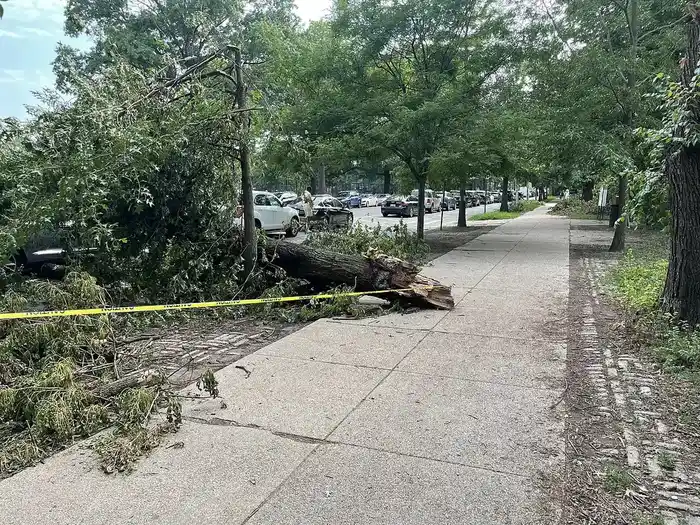
Ice writes a different cleanup list than wind in South Wichita: fewer whole trees down, more crowns shattered in place - thousands of pounds of broken limbs still hanging in trees that look, from the street, merely untidy. That cleanup is climbing work, done piece by piece over days, and it is where the real hazard hides.
South Wichita grew along the Pawnee and Broadway corridors as a working-class side of the city, with Pawnee Prairie Park and the Cowskin Creek greenbelt at its heart. Its tree story is a storm story: the May 1999 tornado and the April 2012 tornado both crossed this side of town, and the canopy has been regrowing - and being replanted - ever since.
No two Wichita neighborhoods grow the same canopy. Postwar ranch and minimal-traditional homes, many re-landscaped in waves after the storm years - and that shapes the tree work directly. Two tornado paths crossed here thirteen years apart, so South Wichita's trees come in age bands: the pre-1999 survivors, the post-1999 plantings now at mid-size, and the fast fill-ins - Bradford pears and silver maples - planted for quick shade that are now splitting on schedule. For storm damage cleanup in South Wichita, cleanup calls here start with the debris map and the trees it came from.
The local equation starts at Pawnee Prairie Park along the Cowskin Creek: how the land lies, how the houses sit, how the trees hang over them - three facts that decide most of the work.
Signs South Wichita Homes Need Storm Damage Cleanup
Split unions that opened in the storm
Unions that cracked but held are the quietest storm damage there is - and the most consequential, because the next load meets a joint already parted.
Hangers in the standing crowns
Broken limbs caught in the canopy are the storm's unfinished business - they fall on their own schedule, usually in the next wind, usually onto whatever the first storm spared.
Debris fields of brush and wood
The brush mountain a storm leaves - limbs, tops, whole crowns in pieces - overwhelms curbside patience and DIY weekends alike.
Why This Work Runs in South Wichita
What cleanup leaves behind decides the next decade: stumps to grind or keep, survivors to prune back into balance, gaps to replant. The storm took the canopy it took; the cleanup is where the owner chooses what the street looks like in ten years - and a good crew treats the replanting conversation as part of the job, not an afterthought.
Two tornado paths crossed here thirteen years apart, so South Wichita's trees come in age bands: the pre-1999 survivors, the post-1999 plantings now at mid-size, and the fast fill-ins - Bradford pears and silver maples - planted for quick shade that are now splitting on schedule. Storm-weakened trees that were never assessed are the standing risk.
In South Wichita, that plays out street by street - after a storm, the pattern is the debris map - what fell, what hangs, and what is still moving. Ask the South Wichita arborists and they will name the same short list of streets where storm damage cleanup calls repeat - and the reasons are visible from the ground.
Summer splits in two: the storm tail of June and early July, when late cells still tear at crowns, and the long bake that follows, when drought stress shows first in the trees planted in tight soil and parking-lot islands. Most storm damage is discovered in summer - the storm did the work in spring, and the failures report as the heat and wind finish them. Deep watering of young trees is the season's quiet essential.
If the tree is huge, hollow or over lines, say so when you book. The method adjusts - ropes, a lift, a different crew mix - and it adjusts best before the truck rolls. The same goes for gates, dogs and the septic field nobody should park a chipper on. Details given early are cheap; details discovered on site cost a second visit.
The practical read for South Wichita this season: check the unions, check the bases, and let the care calendar do the rest.
Write down the pattern before you call: when it started, where it shows, what the weather was doing - a decline's timing against the seasons is half the diagnosis in South Wichita as everywhere.
How Storm Damage Cleanup Works in South Wichita
The full step-by-step process for this service - inspection, scope, the work itself and follow-up - is laid out on the main Storm Damage Cleanup page. In South Wichita the same sequence runs with the local map in hand: the canopy around Pawnee Prairie Park along the Cowskin Creek, the housing pattern described above, and the exposure this neighborhood actually carries.
The South Wichita Angle
Start with the map of South Wichita: the streets around Pawnee Prairie Park along the Cowskin Creek set the daily pattern - wind path, ice load and storm history in the same few blocks. The buildings themselves give the first clues about the canopy. Postwar ranch and minimal-traditional homes, many re-landscaped in waves after the storm years.
What the neighborhood planted, aged and patched fills in the rest. Two tornado paths crossed here thirteen years apart, so South Wichita's trees come in age bands: the pre-1999 survivors, the post-1999 plantings now at mid-size, and the fast fill-ins - Bradford pears and silver maples - planted for quick shade that are now splitting on schedule. Storm-weakened trees that were never assessed are the standing risk. Done in that order, storm damage cleanup in South Wichita stops being a recurring surprise and becomes a managed routine.
South Wichita does not sit alone on the map. It weathers the same storms as Planeview, Oaklawn and Delano - the same cells cross the county, the same wind works the same canopies, and the same seasons move through all of them within the same few weeks. The borders on the map are postal, not meteorological - the weather commutes freely, so the tree care has to think in neighborhoods, not addresses.
On the route map, South Wichita sits in the wichita neighborhood group, ZIP 67211 - close enough to Planeview, Oaklawn that crews work them on the same runs. For storm damage cleanup, that grouping matters - exposure, timing and canopy age are read at the route level, not guessed address by address.
One last local truth: South Wichita trees do not fail at random. They fail along lines the neighborhood drew - the exposure lines, the species lines, the planting-era lines - and reading those lines is most of the trade.
Prevention That Helps in South Wichita
- Replant gaps with storm-shaped species choices: strong unions, right size, away from the lines this time.
- Ask for the survivors' verdicts in writing; the tree that 'made it' deserves a document, not a shrug.
- Get hangers and splits handled in the first cleanup pass - deferred storm damage compounds with every wind.
Postwar ranch and minimal-traditional homes, many re-landscaped in waves after the storm years.
Keep Exploring
Storm Damage Cleanup nearby:
- Storm Damage Cleanup in Planeview
- Storm Damage Cleanup in Oaklawn
- Storm Damage Cleanup in Delano
- Storm Damage Cleanup in Southwest Wichita
More services in South Wichita:
- Emergency Tree Service in South Wichita
- Tree Trimming & Pruning in South Wichita
- Debris & Firewood Removal in South Wichita
- Hedge & Shrub Trimming in South Wichita
See the full tree care page for South Wichita and the Storm Damage Cleanup overview for Wichita.
Storm Damage Cleanup in South Wichita - Questions
What happens to all the wood and brush from my South Wichita yard?
As you choose: chipped and hauled, chipped and left as mulch, cut to firewood lengths and stacked, or hauled whole. Storm volume overwhelms most owners' first guess - a mature crown is several truckloads - so the choice is made at the survey with the true volume in view.
A tree in South Wichita lost half its crown. Can it be saved?
Sometimes - if the trunk and root plate are sound and the remaining crown can be reduced back into balance, a strong species can rebuild a crown in a few seasons. If the loss exposed a split trunk, or the species is brittle or borer-spent, the honest verdict is removal. The assessment weighs the tree's structure, not its shade, and tells you which case you hold.
How does Storm Damage Cleanup work around Pawnee Prairie Park along the Cowskin Creek?
The landmark matters because it concentrates the pattern - exposure, storm paths, and the neighborhood's planting era in one place. Storm Damage Cleanup visits in South Wichita read that pattern first: where the wind, ice and decline gather, the tree work follows, and the scope is drawn from it.
A Dead Limb Over the Roof, a Leaning Trunk or Storm Debris in the Yard?
One call connects you with a tree care professional serving Wichita and the surrounding communities - assessment, trimming, removal and cleanup.
📞 Call Now