Signs a Tree Is Dying: A Wichita Homeowner's Checklist
Trees announce their decline in order: the crown thins and shortens first, the trunk shows seams and fungus, the base tells the final truth - most owners read the list backwards.
Read the Guide
The same species lives decades less in Kansas than in a calm climate - wind load, ice storms and drought spend a tree's life faster than time alone ever will.
Problem: The same species lives decades less in Kansas than in a calm climate - wind load, ice storms and drought spend a tree's life faster than time alone ever will.
Solution: Know each species' realistic range, grade your trees by structure and health rather than birthday, and plan renewals and successions as the mid-life events they are.
When to call: Call when a tree passes its species' local range with defects showing, when failures start appearing in new places each season, or when you need a documented remaining-life read for a sale or a plan.
Every tree tag in the nursery carries a lifespan story, and almost none of those stories were written in storm country. The homeowner who plans a Wichita canopy by the catalog numbers - a century for this, fifty years for that - plans wrong in a consistent direction: the plains spend trees faster. This guide lays out what local trees actually give, species by species, and how to read where yours stands.
Wichita sits on the central Kansas plains where the Arkansas and Little Arkansas rivers meet, and plains weather writes the tree calendar here: spring severe storms with damaging wind, winters that deliver canopy-breaking ice, and long summer droughts broken by downpours. A tree in Wichita is not tested by one climate - it is tested by all of them, in turns, every year of its life.
Start with the anchors. Bur oak and hackberry are the century trees of this country - slow, dense-wooded, built for wind - and a well-sited bur oak can shade five generations. American elm runs sixty to a hundred years where the borers and storms allow; pecan and walnut along the rivers live long and grow heavy doing it. These are the trees Wichita's old neighborhoods were planted around, and their remaining elders are the city's true canopy capital.
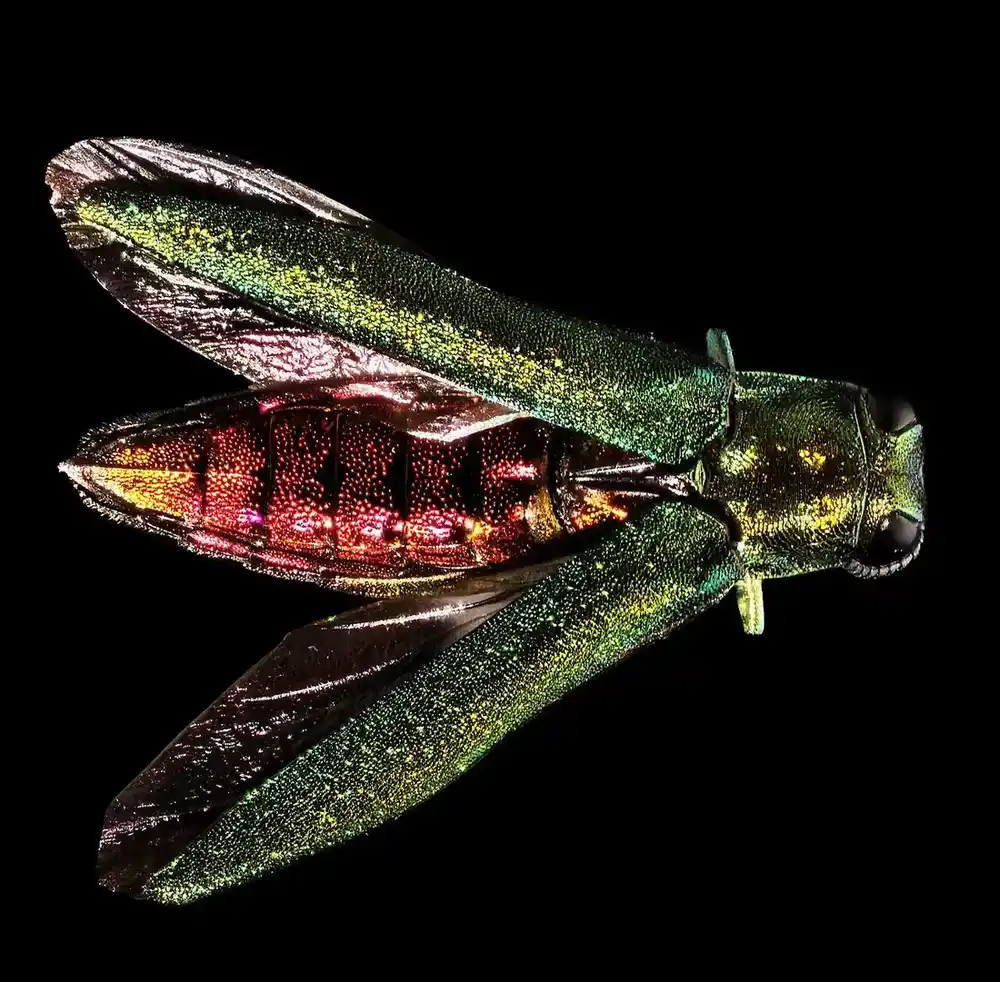
Then the short accounts. Bradford pear was planted by the subdivision and is spent by thirty - most split between fifteen and twenty-five. Silver maple gives thirty to fifty fast, thirsty years and hollows as it goes. Green ash would have run fifty to seventy; the emerald ash borer has rewritten that entry to 'until the beetle arrives'. Siberian elm and mulberry live hard, brittle middle-length lives and volunteer for more. The honest summary: a Kansas yard is a portfolio of clocks, and the plan follows the fastest one.
Wind is the main spender. It does not take most trees in one gust; it fatigues them - working the unions, twisting the crowns, exploiting every included-bark seam - so that the tree's failure, when it comes, is the sum of ten thousand ordinary days plus one loud one. Trees with sound structure, built by early training cuts, bank those days; trees with co-dominant stems spend them.
Ice and drought spend what is left. A single ice storm can remove a decade of crown in a night on a brittle species, and the drought years write themselves into thin rings and thinner crowns that never fully refill. This is why Kansas trees so often look 'fine for years, then suddenly old': the spending is invisible until the account runs low, and the failures arrive together when it does.
Appearance lies politely; evidence does not. Annual shoot growth - the length of the twigs the tree made this year - is a vigor meter anyone can read. Bark seams, fungal conks, the pattern of past failures, and the crown's density map the rest. A tree's paper age and its condition age routinely differ by decades in this climate, in both directions: sheltered, pruned oaks run young; exposed, neglected pears run old at twenty.
The base is the other witness. The root flare should stand proud like a bell bottom; a trunk that enters the ground like a telephone pole is describing buried roots and slow strangulation, whatever the crown claims. When an arborist gives you a remaining-life range, it should be traceable to this kind of evidence - because that is also the evidence that decides treat-versus-remove arguments later.
Walk any older Wichita street and the map is visible: the oak planted in 1935 still ascending, the pear from 1990 already finished, the ash on this decade's borrowed time. Remaining life is therefore a set of numbers, not one - and plans that honor that (a successor planted in the pear's shadow years before its split) extract the full value of every tree instead of mourning them in sequence.
The same is true across a region: the drought of one decade retires more trees than any storm, and the planting fashions of another load the future failure calendar. When comparing your tree's fate to a catalog's promise, compare structure and storm history, not birthdays - the variables that decide lifespan are standing in the yard and written in the weather record, not on the nursery tag.
Every long-lived tree contains smaller clocks that reset its big one: the union that gets cabled at twenty, the crown reduced at forty, the root zone decompacted at fifty. Plotted on one calendar, a heritage tree's life stops looking like a countdown and starts looking like a schedule - and schedules, unlike countdowns, can be planned and budgeted calmly.
This is also the answer to the 'how long will my tree live' question that respects the asker: the tree will live as long as its renewals happen and its storm luck holds. The trees that beat their ranges are not lucky in the end; they are calendared.
An arborist's report reads a tree the way a good inspection reads anything: in layers of time. The crown says what the last few seasons did. The trunk and base say what the last decade did - every scar and seam a dated entry. The site says what the future is loading onto it. Put together, they produce the only number that matters for planning: not the tree's age, but its remaining safe life, part by part.
That is the service side of this guide's subject. When you are ready, the Arborist Services page carries the process, the coverage by neighborhood and the number to call.
Name each tree correctly - species first, since the species sets the range everything else is measured against.
Crown vigor, trunk soundness, union structure and root flare each get a read; the weakest part sets the plan.
Measure your tree's age against Kansas service life, not the catalog - and weight its storm history heaviest.
Plant the successor while the elder still stands where you can - shade continuity is a decision made ten years early.
Photograph each mature tree annually, same month, same angles - the lifespan record builds itself.
Log renewals and events (cabling, reductions, storm losses) with dates in the tree file.
Grade remaining life by the weakest part, plan the budget by the portfolio.
Plant the successor while the elder stands - shade continuity is bought a decade early.
When you request a lifespan assessment, expect a tree-by-tree condition report: species and estimated age, structural grades per part, storm history findings, defect inventory with photographs, and a remaining-life estimate stated as a range per tree with the reasoning shown.
You should also receive the succession calendar - what comes due, in what order, and what waiting would cost - so the canopy's remaining years are managed as a plan rather than discovered as emergencies.
A professional lifespan assessment walks your trees as a portfolio, not a problem: each tree gets its species clock, its structural grade and its place in the yard's succession - the old oak managed for decades more, the pear scheduled for its dignified exit, the successor already chosen and sited. The deliverable is a calendar with your canopy's next thirty years on it, which converts every future tree decision from a surprise into a line item.
Planting another fast, short-clock tree to replace the one that just failed fast - the calendar repeats.
Judging a bur oak by a Bradford pear's schedule, or a pear by an oak's - the clocks are not transferable.
Removing a sound old tree for its birthday; structure, not age, is the removal criterion.
Forgetting the successor until the elder is gone - then buying ten years of missing shade at retail.
Read your trees' ages in storm seasons and care calendars, not birthdays, and their story gets more manageable, not less: most of what weather takes can be renewed on schedule, and most of what surprises owners was a renewal wearing a disguise. A single call gets the tree-by-tree read started - and turns 'how long do I have?' into a calendar instead of a guess.
Trees announce their decline in order: the crown thins and shortens first, the trunk shows seams and fungus, the base tells the final truth - most owners read the list backwards.
Read the GuideLate winter is the plains' great pruning window - dormant wood, visible structure, inactive disease beetles - but every species keeps one date of its own.
Read the GuideIt depends entirely on the species and the condition. Forty years is late life for a Bradford pear or a silver maple with a hollow base, mid-life for an elm or a pine, and early middle age for a bur oak with sound structure. Age starts the conversation; the part-by-part grades finish it.
Storm luck and structure. Wind falls in swaths - one yard can take the core of a gust front while the next gets rain. Beyond luck, pruning history separates twins: a tree trained to one leader can outlast its co-dominant twin by decades, and the difference was decided by cuts made, or skipped, when both trees were young.
Yes - it is the one variable fully in the owner's control. Mulch and water through drought, structural pruning on schedule, defects cabled or removed young: each slows a specific clock. Care cannot rescue a spent structure, but across a tree's life it routinely moves the removal date by a decade or more.
Usually the unions, not the trunk: the co-dominant fork with bark included, the long limb's attachment, the old topping stub's regrowth. That is good news disguised as bad - the parts that fail first are the parts assessment and pruning reach soonest.
One call connects you with a tree care professional serving Wichita and the surrounding communities - assessment, trimming, removal and cleanup.
📞 Call Now