Debris & Firewood Removal in Riverside
Debris & Firewood Removal for Riverside homes - local conditions, a clear process, and one call to get it started.
The first five minutes of a visit in Riverside are all looking - unions, bases, crowns, targets - because looking is what makes the rest of it work.
Firewood has its own honest arithmetic in Riverside: a cord is a measured stack, seasoned oak and pecan burn like money, elm burns like an apology, and green cottonwood is mostly water with ambitions. The service cuts through the folklore - what to keep, what to haul, what a winter's worth actually looks like stacked.
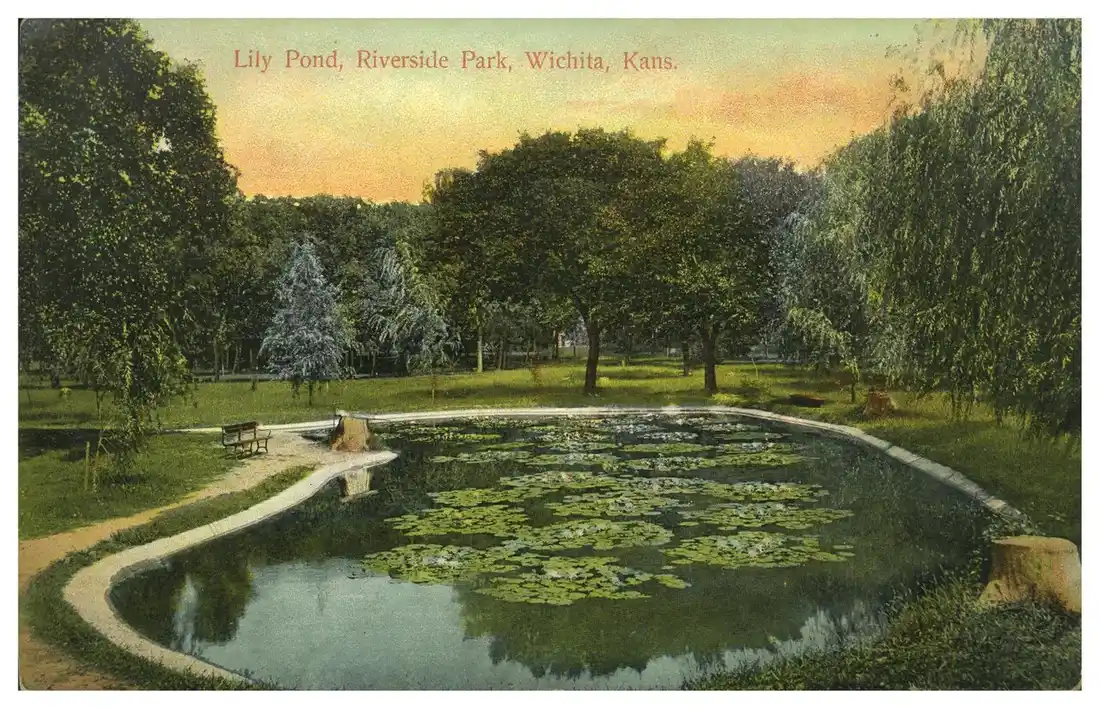
Riverside is Wichita's oldest garden neighborhood, laid out in the 1880s along the bend where the Little Arkansas meets the Arkansas River. Riverside Park, the Wichita Art Museum and the city's grandest historic homes sit under one of the oldest planted canopies in Kansas - a canopy now passing, tree by tree, into old age.
Local conditions shape the work here. Victorian-era and early-1900s homes, Craftsman bungalows and later infill, many on deep lots planted a century ago - and that shapes the tree work directly. Riverside's trees are its infrastructure: American elms that survived Dutch elm disease, hackberries, bur oaks and river pecans of great size and age. For debris & firewood removal in Riverside, debris calls here start with the scatter pattern - size, spread and what the trees still hold.
The view near the confluence of the Arkansas and Little Arkansas rivers, below the Keeper of the Plains is the local argument: trees of one era, one storm track, one wind path - and one shared service pattern.
Signs Riverside Homes Need Debris & Firewood Removal
A brush pile older than the season
Last spring's pruning mountain, still there: it compacts, harbors wasps and rodents, and grows a weed thicket through it.
Storm wood still in the side yard
The cleanup after the cleanup: the trunk wood the emergency crew left stacked by agreement, now in the way of mowing, planting and everything since.
Firewood of unknown age and species
The inherited stack: gray, light, punky in the middle.
Why This Work Runs in Riverside
There is also a disease etiquette to wood: oak from a wilt-killed tree and ash from borer ground are not souvenirs to haul to the lake lot. Infected wood moved is infection delivered. A debris crew that knows the local diseases stacks, hauls and disposes accordingly - and will tell you which of your piles should never travel.
Riverside's trees are its infrastructure: American elms that survived Dutch elm disease, hackberries, bur oaks and river pecans of great size and age. The work here is preservation-first - structural pruning, cabling on split-prone giants, and honest end-of-life calls on trees that have shaded four generations.
In Riverside, that plays out street by street - for debris removal, watch the scatter - the yard tells the storm's story in pieces. Ask the Riverside arborists and they will name the same short list of streets where debris & firewood removal calls repeat - and the reasons are visible from the ground.
Winter's other story is structure. Bare crowns show everything the leaves hid: the co-dominant stems, the included bark, the old topping cuts growing out into weak, crowded regrowth. Snow is rarely the problem here - it melts in days - but ice coats every one of those defects in weight. The winter read is about structure: that is where the season files its claims.
Two things decide how much a visit accomplishes: access and honesty. Access means the crew can reach the trees, the gates and both side yards. Honesty means the full history - the limb that fell two summers ago, the crack that opened last winter, the treatment from three owners back. With both, the first visit usually settles the diagnosis for good.
The turning season rearranges exposure in Riverside: the union that took the June wind is the union the first ice will interview in December.
Homeowners in Riverside ask what they should do before the visit. The answer is access, not cleanup: clear the gates, the side yards and the drop zones, and secure the pets. The evidence should stay exactly where it is.
How Debris & Firewood Removal Works in Riverside
The full step-by-step process for this service - inspection, scope, the work itself and follow-up - is laid out on the main Debris & Firewood Removal page. In Riverside the same sequence runs with the local map in hand: the canopy around the confluence of the Arkansas and Little Arkansas rivers, below the Keeper of the Plains, the housing pattern described above, and the exposure this neighborhood actually carries.
The Riverside Angle
Ask anyone who works trees in Riverside and they will tell you the pattern repeats: the storm losses, the species failures, and the seasons grade the result. Housing here tells the arborist where to look first. Victorian-era and early-1900s homes, Craftsman bungalows and later infill, many on deep lots planted a century ago.
The tree side of the equation is just as local. Riverside's trees are its infrastructure: American elms that survived Dutch elm disease, hackberries, bur oaks and river pecans of great size and age. The work here is preservation-first - structural pruning, cabling on split-prone giants, and honest end-of-life calls on trees that have shaded four generations. Which is the whole method: read Riverside first, then do debris & firewood removal work that fits what the reading found.
Riverside does not sit alone on the map. It weathers the same storms as Downtown Wichita, Delano and Midtown - the same cells cross the county, the same wind works the same canopies, and the same seasons move through all of them within the same few weeks. The neighborhoods lean on each other here: the same storm cell grades them all within the same hour.
On the route map, Riverside sits in the wichita neighborhood group, ZIP 67203 - close enough to Downtown Wichita, Delano that crews work them on the same runs. Crews working a route learn its trees - the repeat splits, the declining ash, the unions that go first - and debris & firewood removal gets better every run.
One thing this neighborhood teaches every crew that works it: the order matters. Diagnose the whole tree, not the symptom that triggered the call - the limb you see fell from a failure that started somewhere structural, and cutting without that map buys the problem back within a season or two.
Prevention That Helps in Riverside
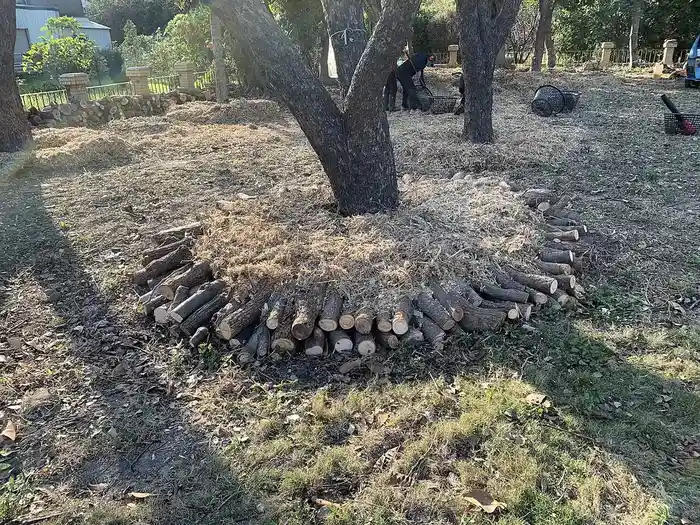
- Never stack firewood against the house or the fence - eighteen inches of air is the simplest pest control there is.
- Keep the stack off the ground on rails or pallets; ground contact is rot and termites on a schedule.
- Cover the top only; a fully tarped pile steams instead of seasoning.
Victorian-era and early-1900s homes, Craftsman bungalows and later infill, many on deep lots planted a century ago.
Keep Exploring
Debris & Firewood Removal nearby:
- Debris & Firewood Removal in Downtown Wichita
- Debris & Firewood Removal in Delano
- Debris & Firewood Removal in Midtown
- Debris & Firewood Removal in Benjamin Hills
More services in Riverside:
- Emergency Tree Service in Riverside
- Storm Damage Cleanup in Riverside
- Stump Removal in Riverside
- Cabling & Bracing in Riverside
See the full tree care page for Riverside and the Debris & Firewood Removal overview for Wichita.
Debris & Firewood Removal in Riverside - Questions
Will you haul away just a brush pile in Riverside, with no other work?
Yes - debris hauling stands alone as a service: brush piles, old stacks, storm remnants, the side-yard accumulation. The load is measured as it stands, chipped or hauled as the volume dictates, and the ground where it sat is raked back to yard. Small job, same standard: the corner is returned, not just emptied.
How long does firewood need to season in Riverside?
Split and stacked properly, most Kansas hardwoods season across one summer of wind - six to nine months for oak to be at its best, less for elm and ash. Whole rounds season at a fraction of that pace, which is why splitting happens now rather than in November. A moisture reading under twenty percent is the burn-ready line.
When is Debris & Firewood Removal most needed in Riverside?
Need follows the season and the neighborhood together: the storm months raise the baseline everywhere, and Riverside's specific exposure - its slope aspects, its planting era, its canopy age - decides which weeks bite hardest. A local assessment reads both clocks at once.
A Dead Limb Over the Roof, a Leaning Trunk or Storm Debris in the Yard?
One call connects you with a tree care professional serving Wichita and the surrounding communities - assessment, trimming, removal and cleanup.
📞 Call Now