Tree Health & Disease Treatment in Goddard
Tree Health & Disease Treatment for Goddard homes - local conditions, a clear process, and one call to get it started.
In Goddard, tree health & disease treatment begins with a look up, not a ladder - the evidence here writes its own work order.
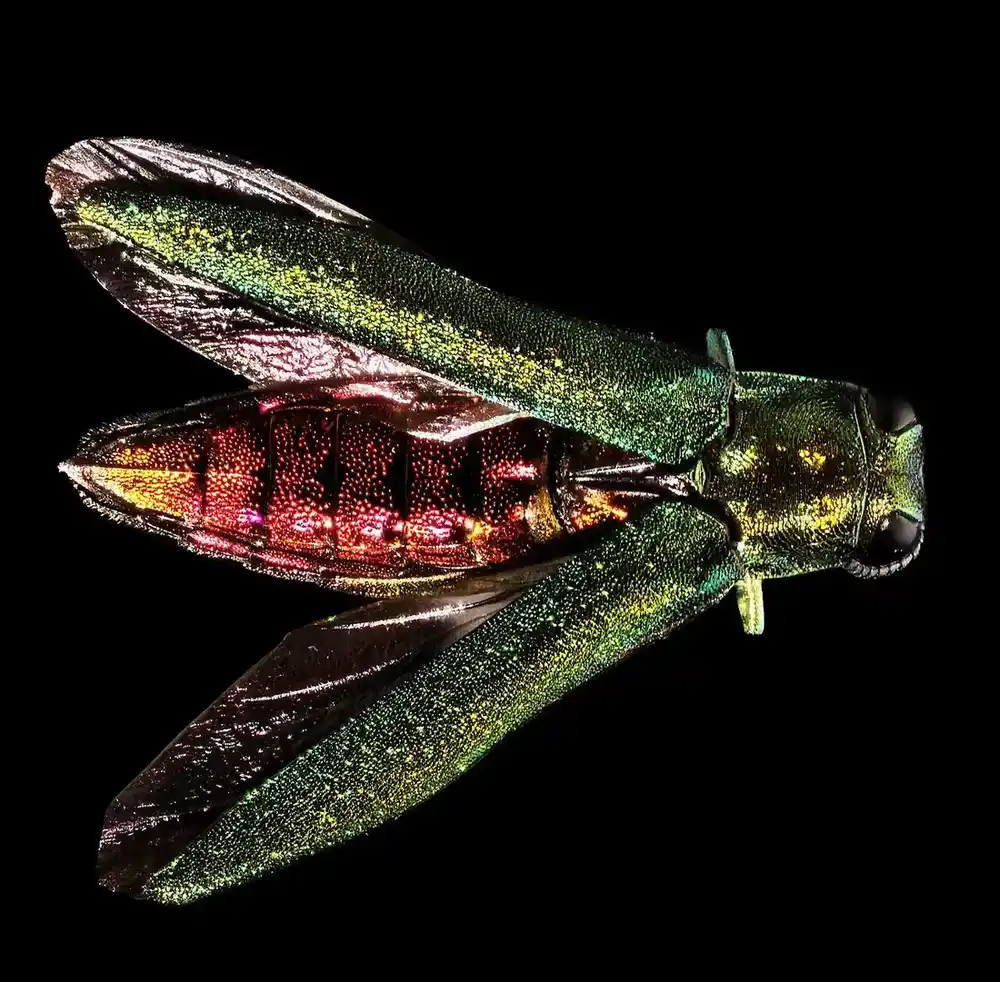
Kansas trees fight a named list of enemies in Goddard: the emerald ash borer spending ash from inside, oak wilt moving through root grafts, iron chlorosis yellowing the pin oaks in alkaline ground, bagworms and borers and cankers working the weakened. Each has a season, a signature and a window in which treatment actually works.
Goddard is a growing city west of Wichita on US-54, known for Tanganyika Wildlife Park and a strong school district. Older small-town blocks anchor the center while subdivisions spread around it, and the trees range from old street plantings to new-yard saplings.
This part of the county has its own version of every tree. Small-town homes, newer subdivisions and rural properties west toward the county line - and that shapes the tree work directly. West-side exposure is Goddard's tree story: storms arrive off open country with no windbreak, so structure decides outcomes - the trees pruned for it stand, and the topped, lion-tailed survivors of old storm cleanups fail again. For tree health & disease treatment in Goddard, health calls here read the crown's thin spots, the bark and the soil before any treatment.
Walk Goddard from Tanganyika Wildlife Park on the city's edge and the assessment writes itself: exposure by block, species by street, deadlines by season.
Signs Goddard Homes Need Tree Health & Disease Treatment
Bags, webs and chewed crowns
Bagworms can defoliate a cedar or spruce in weeks and kill what they strip two years running; fall webworm is uglier than it is harmful.
Oak leaves wilting in early summer
Oak wilt moves fast in the red oak family - leaves bronzing and dropping in June, whole trees dead by August, and the disease traveling to the next oak through grafted roots.
Ash with a thinning, dying-back crown
The emerald ash borer's signature is written top-down: the upper crown thins, bark splits over galleries, woodpeckers fleck the trunk for the larvae inside.
Why This Work Runs in Goddard
Every treatment has a window, and the windows run on the pest's calendar, not the owner's: bagworm spray works on young larvae in early summer and barely touches the grown bags; oak wilt is prevented by winter pruning and root-graft discipline, not cured in July; borer treatment starts before symptoms in a tree worth keeping. The health visit's real product is that calendar, fitted to your trees.
West-side exposure is Goddard's tree story: storms arrive off open country with no windbreak, so structure decides outcomes - the trees pruned for it stand, and the topped, lion-tailed survivors of old storm cleanups fail again. The rural lots add failing Siberian elm windbreaks and cedar rows crowding the lanes.
In Goddard, that plays out street by street - for tree health, watch the drip line - chlorosis, thin crowns and early fall color live there. Around Tanganyika Wildlife Park on the city's edge, the service rhythm runs a few weeks ahead of the calendar - exposure shows up early where the trees are oldest.
Spring is storm season in Wichita, and it is tree season too. From March into June, supercell thunderstorms roll off the plains with damaging wind, and the trees that get a structural look before the season are the ones that come through it standing. Late spring is also when winter's hidden damage declares itself - limbs that died under ice, crowns that leaf out thin, and borers resuming their work in the ash.
Before the visit, clear access to the trees and the drop zones where pieces will land, and secure pets. During the visit, expect a plain-English explanation of findings; after it, a short list of the care items on your side that keep the problem from restarting.
This season, the watch item in Goddard is the sky: every spring cell that builds over the plains grades the canopies below it, and the yards near Tanganyika Wildlife Park on the city's edge read the results first.
Do not cut anything before the visit. A fresh amateur cut over a defect buries the evidence and can turn a one-visit diagnosis into two. Photograph what you see instead - a phone photo is the most useful thing you can hand an arborist.

How Tree Health & Disease Treatment Works in Goddard
The full step-by-step process for this service - inspection, scope, the work itself and follow-up - is laid out on the main Tree Health & Disease Treatment page. In Goddard the same sequence runs with the local map in hand: the canopy around Tanganyika Wildlife Park on the city's edge, the housing pattern described above, and the exposure this neighborhood actually carries.
The Goddard Angle
Start with the map of Goddard: the streets around Tanganyika Wildlife Park on the city's edge set the daily pattern - wind path, ice load and storm history in the same few blocks. Housing here tells the arborist where to look first. Small-town homes, newer subdivisions and rural properties west toward the county line.
Layer the treetops on top and the job defines itself. West-side exposure is Goddard's tree story: storms arrive off open country with no windbreak, so structure decides outcomes - the trees pruned for it stand, and the topped, lion-tailed survivors of old storm cleanups fail again. The rural lots add failing Siberian elm windbreaks and cedar rows crowding the lanes. A proper tree health & disease treatment call in Goddard therefore starts with reading - the exposure, the defects, the evidence - and only then moves to the work.
Goddard does not sit alone on the map. It weathers the same storms as Maize, West Wichita and Southwest Wichita - the same cells cross the county, the same wind works the same canopies, and the same seasons move through all of them within the same few weeks. The borders on the map are postal, not meteorological - the weather commutes freely, so the tree care has to think in neighborhoods, not addresses.
On the route map, Goddard sits in the sedgwick county city group, ZIP 67052 - close enough to Maize, West Wichita that crews work them on the same runs. That local memory is the quiet advantage of route-based work in Goddard.
A note on timing that the local pattern makes plain: tree health & disease treatment done in the quiet months is a different service from the same work done in the emergency weeks - same trade, same crew, but planned instead of reactive, and thorough instead of triaged.
Prevention That Helps in Goddard
- Mulch wide and shallow over root zones, keep the flare visible, and never let a grade change bury a trunk.
- Have thin-crowned trees diagnosed the first season it happens - the treatment window is the first chapter of every success story.
- Buy local firewood and move none from infested ground - the borer travels in the firewood pile farther than it flies.
Small-town homes, newer subdivisions and rural properties west toward the county line.
Keep Exploring
Tree Health & Disease Treatment nearby:
- Tree Health & Disease Treatment in Maize
- Tree Health & Disease Treatment in West Wichita
- Tree Health & Disease Treatment in Southwest Wichita
- Tree Health & Disease Treatment in Clearwater
More services in Goddard:
- Storm Damage Cleanup in Goddard
- Stump Removal in Goddard
- Arborist Services in Goddard
- Tree Removal in Goddard
See the full tree care page for Goddard and the Tree Health & Disease Treatment overview for Wichita.
Tree Health & Disease Treatment in Goddard - Questions
My Goddard tree looks sick but I do not know why. Where do I start?
With the ground, honestly: most unexplained decline in Wichita traces to roots and soil - compaction, buried flares, girdling roots, drought debt - with pests arriving second to feed on the weakened. The diagnostic visit reads base and site before crown and sprayer, because treating a soil problem with a pesticide is the most expensive way to learn the difference.
Can my Goddard ash tree be saved from the emerald ash borer?
If its crown is still substantially full and its structure sound, a systemic treatment program can protect it indefinitely, renewed on its multi-year cycle. If the borer has taken a third or more of the crown, treatment rarely restores it, and the honest money goes to removal and replanting. The assessment measures the crown and the borer sign, and the answer follows the measurement - which is why the look should happen before the thinning you can see from the street.
How does Tree Health & Disease Treatment work around Tanganyika Wildlife Park on the city's edge?
The landmark matters because it concentrates the pattern - exposure, storm paths, and the neighborhood's planting era in one place. Tree Health & Disease Treatment visits in Goddard read that pattern first: where the wind, ice and decline gather, the tree work follows, and the scope is drawn from it.
A Dead Limb Over the Roof, a Leaning Trunk or Storm Debris in the Yard?
One call connects you with a tree care professional serving Wichita and the surrounding communities - assessment, trimming, removal and cleanup.
📞 Call Now