Tree Health & Disease Treatment in Northwest Wichita
Tree Health & Disease Treatment for Northwest Wichita homes - local conditions, a clear process, and one call to get it started.
Around the Sedgwick County Park lakes, the calls follow a rhythm the whole neighborhood recognizes.
The honest core of tree health work in Northwest Wichita: treatment protects, it rarely resurrects. The ash treated while its crown is full stays full; the ash treated after the borer took half of it stays half. Health programs are therefore built on timing - assessments early, treatments in their windows, and the discipline to say when a tree is past treating.
Northwest Wichita spreads around Sedgwick County Park and the 13th Street corridor, a suburban side of town built largely from the 1980s onward, with newer subdivisions still filling toward the county edge. Its park lakes and green spaces give it more public canopy than most of the suburbs.
The details of the neighborhood matter for this work. 1980s-2010s suburban homes with planted trees now reaching mid-size and full spread - and that shapes the tree work directly. Open-edge exposure is the northwest story for trees as much as houses: subdivisions stand in the wind's path, and their plantings - ash, pear, maple - take storm load with no shelter. For tree health & disease treatment in Northwest Wichita, health calls here read the crown's thin spots, the bark and the soil before any treatment.
At the Sedgwick County Park lakes, Northwest Wichita tells you its priorities: which trees the wind found, which the ice found, and which the slow clock of age found first.
Signs Northwest Wichita Homes Need Tree Health & Disease Treatment
A tree that just is not thriving
Stunted leaves, early fall color, slow decline with no single villain: usually the root zone - compaction, grade changes, girdling roots, drought.
Oak leaves wilting in early summer
Oak wilt moves fast in the red oak family - leaves bronzing and dropping in June, whole trees dead by August, and the disease traveling to the next oak through grafted roots.
Yellow leaves with green veins
Iron chlorosis - pin oaks, silver maples and river birch in alkaline Kansas soil unable to take up iron.
Why This Work Runs in Northwest Wichita
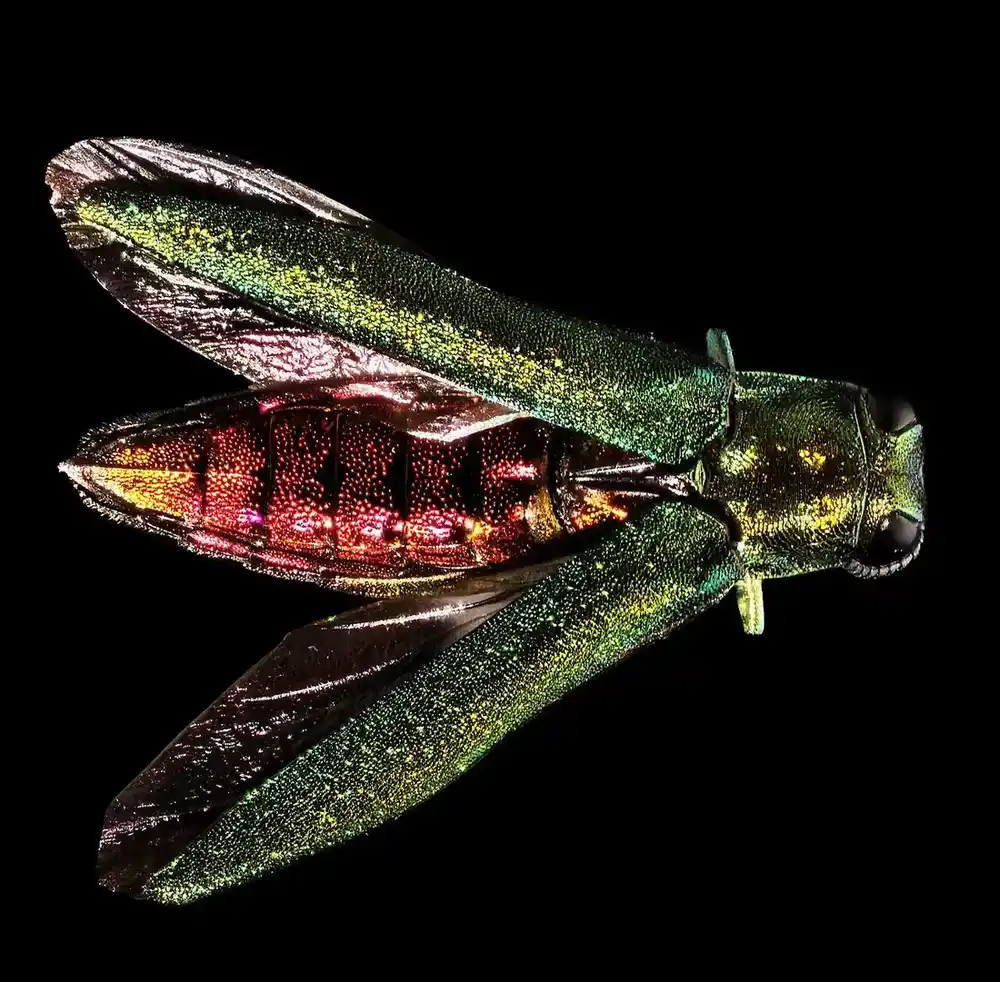
The emerald ash borer deserves its own paragraph because it is rewriting Wichita's canopy. The beetle's larvae feed under the bark, cutting the tree's plumbing in ribbons; the tree dies over two to four years from the top down. Systemic trunk treatments protect a sound ash on a repeating cycle - an ongoing program, like a prescription, that only works while enough crown remains to move the treatment through the tree.
Open-edge exposure is the northwest story for trees as much as houses: subdivisions stand in the wind's path, and their plantings - ash, pear, maple - take storm load with no shelter. The park-side mature trees along the lakes carry the area's real canopy weight. Young-tree training and storm-readiness pruning are the growth industries here.
In Northwest Wichita, that plays out street by street - for tree health, watch the drip line - chlorosis, thin crowns and early fall color live there. In Northwest Wichita, the tell is usually at the fork - unions, dead tops, the last row of trees before the open country or the river.
Spring's second act is the leaf-out audit. After the first warm weeks, the pattern repeats street by street: the crown that comes back thin, the limb that never leafs at all, the ash the borer spent the winter inside. Owners who walk their trees at leaf-out start their decisions from evidence; owners who skip it find out across the summer, one falling limb at a time.
Two things decide how much a visit accomplishes: access and honesty. Access means the crew can reach the trees, the gates and both side yards. Honesty means the full history - the limb that fell two summers ago, the crack that opened last winter, the treatment from three owners back. With both, the first visit usually settles the diagnosis for good.
Around the Sedgwick County Park lakes, the season shows up early: exposed blocks and older trees run a few weeks ahead of the sheltered ones.
Write down the pattern before you call: when it started, where it shows, what the weather was doing - a decline's timing against the seasons is half the diagnosis in Northwest Wichita as everywhere.
How Tree Health & Disease Treatment Works in Northwest Wichita
The full step-by-step process for this service - inspection, scope, the work itself and follow-up - is laid out on the main Tree Health & Disease Treatment page. In Northwest Wichita the same sequence runs with the local map in hand: the canopy around the Sedgwick County Park lakes, the housing pattern described above, and the exposure this neighborhood actually carries.
The Northwest Wichita Angle
Ask anyone who works trees in Northwest Wichita and they will tell you the pattern repeats: the storm losses, the species failures, and the seasons grade the result. Where the weather lands hardest follows the housing and the trees planted with it. 1980s-2010s suburban homes with planted trees now reaching mid-size and full spread.
The yards complete the picture. Open-edge exposure is the northwest story for trees as much as houses: subdivisions stand in the wind's path, and their plantings - ash, pear, maple - take storm load with no shelter. The park-side mature trees along the lakes carry the area's real canopy weight. Young-tree training and storm-readiness pruning are the growth industries here. The result, when the work follows the map, is a healthier canopy and a shorter list of surprises next season.
Northwest Wichita does not sit alone on the map. It weathers the same storms as West Wichita, Maize and Benjamin Hills - the same cells cross the county, the same wind works the same canopies, and the same seasons move through all of them within the same few weeks. It is also why the seasonal advice repeats across these areas: they stand in the same storm tracks and carry the same ice.
On the route map, Northwest Wichita sits in the wichita neighborhood group, ZIP 67205 - close enough to West Wichita, Maize that crews work them on the same runs. That local memory is the quiet advantage of route-based work in Northwest Wichita.
One thing this neighborhood teaches every crew that works it: the order matters. Diagnose the whole tree, not the symptom that triggered the call - the limb you see fell from a failure that started somewhere structural, and cutting without that map buys the problem back within a season or two.
Prevention That Helps in Northwest Wichita
- Have thin-crowned trees diagnosed the first season it happens - the treatment window is the first chapter of every success story.
- Start ash decisions now: inventory your ash, choose the keepers while their crowns are full, and budget the program or the removal - but do not drift.
- Mulch wide and shallow over root zones, keep the flare visible, and never let a grade change bury a trunk.
1980s-2010s suburban homes with planted trees now reaching mid-size and full spread.
Keep Exploring
Tree Health & Disease Treatment nearby:
- Tree Health & Disease Treatment in West Wichita
- Tree Health & Disease Treatment in Maize
- Tree Health & Disease Treatment in Benjamin Hills
- Tree Health & Disease Treatment in North Wichita
More services in Northwest Wichita:
- Storm Damage Cleanup in Northwest Wichita
- Tree Removal in Northwest Wichita
- Tree Service in Northwest Wichita
- Stump Grinding in Northwest Wichita
See the full tree care page for Northwest Wichita and the Tree Health & Disease Treatment overview for Wichita.
Tree Health & Disease Treatment in Northwest Wichita - Questions
My Northwest Wichita tree looks sick but I do not know why. Where do I start?
With the ground, honestly: most unexplained decline in Wichita traces to roots and soil - compaction, buried flares, girdling roots, drought debt - with pests arriving second to feed on the weakened. The diagnostic visit reads base and site before crown and sprayer, because treating a soil problem with a pesticide is the most expensive way to learn the difference.
Is oak wilt in Northwest Wichita, and how do I protect my oaks?
Oak wilt is established in Kansas and moves two ways: beetles carrying spores to fresh wounds in the warm months, and root grafts between neighboring oaks underground. Protection is discipline - prune only in winter, paint any warm-season wound the day it happens, and never move oak firewood from a dead tree. A wilting red oak in June is a call-now diagnosis; whites resist longer, reds can die in weeks.
Does Tree Health & Disease Treatment in Northwest Wichita cover the streets near the Sedgwick County Park lakes?
Yes - the blocks around the Sedgwick County Park lakes are part of this page's map, along with the rest of Northwest Wichita. The landmark is named here because it anchors the neighborhood's pattern: the exposure and storm history around it shape where the work concentrates.
A Dead Limb Over the Roof, a Leaning Trunk or Storm Debris in the Yard?
One call connects you with a tree care professional serving Wichita and the surrounding communities - assessment, trimming, removal and cleanup.
📞 Call Now