Tree Health & Disease Treatment in Park City
Tree Health & Disease Treatment for Park City homes - local conditions, a clear process, and one call to get it started.
There is a reason this page exists separately from the Wichita one: Park City runs its own version of every tree problem in the county.
A struggling tree in Park City is a diagnosis problem before it is a treatment problem. Thin crowns and early leaf drop can mean the borer, a fungal wilt, yellowed chlorotic leaves from alkaline soil, or roots quietly drowning in compaction - and the four treatments share nothing but the sprayer. Health work starts by naming the cause.
Park City sits at the I-135 and K-96 junction north of Wichita, known for Hartman Arena and a mix of postwar neighborhoods, newer subdivisions and highway commercial strips. Its tree cover mixes postwar yard plantings with the commercial corridor's hard-worked landscape trees.
Local conditions shape the work here. Postwar homes, newer subdivisions and commercial buildings along the highways - and that shapes the tree work directly. Junction-town variety: postwar elms and mulberries in the neighborhoods at full age and full risk, and parking-lot trees along the corridors - heat-stressed, tight-soiled, and pruned mostly by neglect. For tree health & disease treatment in Park City, health calls here read the crown's thin spots, the bark and the soil before any treatment.
Park City wears its climate openly. Around Hartman Arena and the old Kansas Coliseum grounds you can read the season's intentions in the crowns before the first forecast.
Signs Park City Homes Need Tree Health & Disease Treatment
A tree that just is not thriving
Stunted leaves, early fall color, slow decline with no single villain: usually the root zone - compaction, grade changes, girdling roots, drought.
Ash with a thinning, dying-back crown
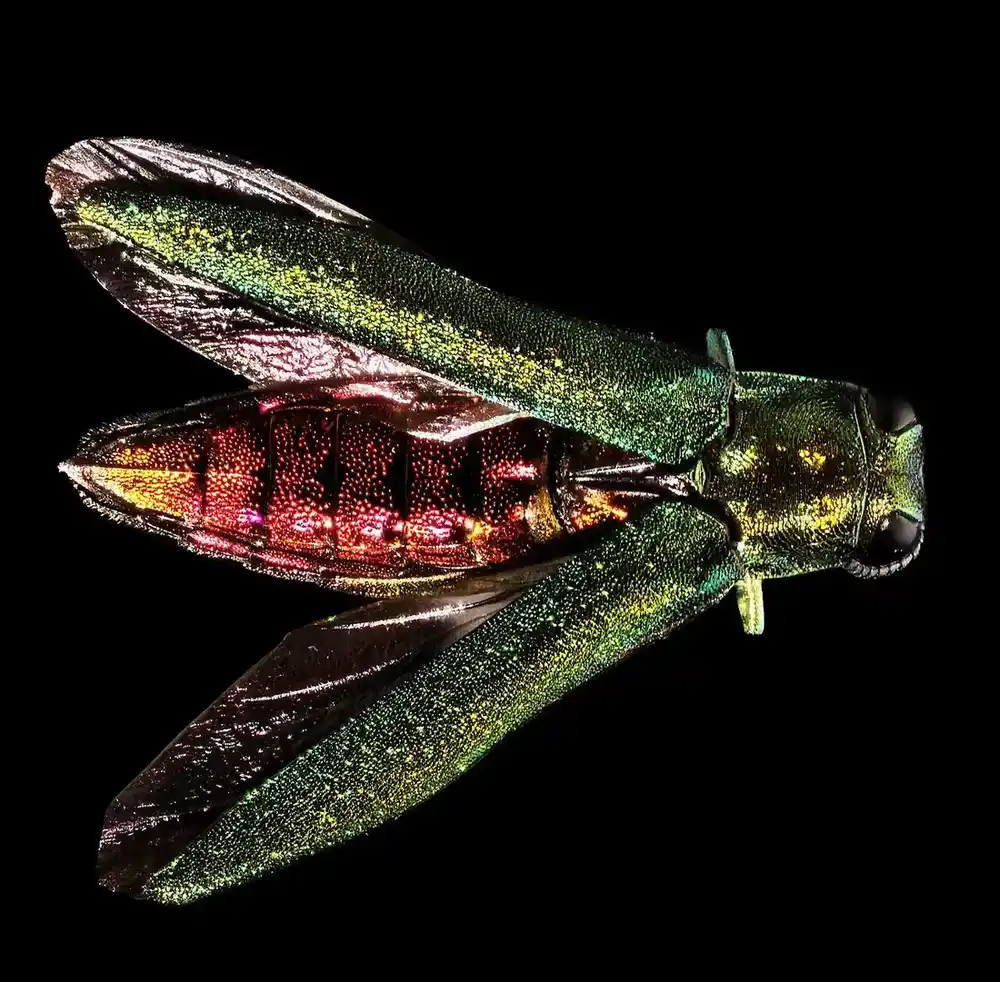
The emerald ash borer's signature is written top-down: the upper crown thins, bark splits over galleries, woodpeckers fleck the trunk for the larvae inside.
Cankers, oozing and cracked bark
Sunken, discolored patches that weep or crack are the tree's infections made visible - bacterial, fungal or the aftermath of storm wounds.
Why This Work Runs in Park City
Soil is the quieter half of tree medicine here. Wichita's alkaline clays lock iron away from the species that crave it, construction compacts root zones into pavement-grade density, and grade changes bury root flares a fatal foot deep. Air-spade excavation, vertical mulching, flare recovery and honest watering plans cure more Wichita trees than any spray ever sold - because more Wichita trees are dying of their ground than of their pests.
Junction-town variety: postwar elms and mulberries in the neighborhoods at full age and full risk, and parking-lot trees along the corridors - heat-stressed, tight-soiled, and pruned mostly by neglect. Storms cross here with nothing in their way, and the older neighborhood canopy shows it after every ice event.
In Park City, that plays out street by street - for tree health, watch the drip line - chlorosis, thin crowns and early fall color live there. Around Hartman Arena and the old Kansas Coliseum grounds, the service rhythm runs a few weeks ahead of the calendar - exposure shows up early where the trees are oldest.
Summer splits in two: the storm tail of June and early July, when late cells still tear at crowns, and the long bake that follows, when drought stress shows first in the trees planted in tight soil and parking-lot islands. Most storm damage is discovered in summer - the storm did the work in spring, and the failures report as the heat and wind finish them. Deep watering of young trees is the season's quiet essential.
Two things decide how much a visit accomplishes: access and honesty. Access means the crew can reach the trees, the gates and both side yards. Honesty means the full history - the limb that fell two summers ago, the crack that opened last winter, the treatment from three owners back. With both, the first visit usually settles the diagnosis for good.
This season, the watch item in Park City is the sky: every spring cell that builds over the plains grades the canopies below it, and the yards near Hartman Arena and the old Kansas Coliseum grounds read the results first.
Before you call, a five-minute walk pays for itself: note where you have seen fallen limbs or thinning crowns, look up for hangers and dead tops, and check the bases for fungus. That list, given on the call, gets the right equipment on the truck.
How Tree Health & Disease Treatment Works in Park City
The full step-by-step process for this service - inspection, scope, the work itself and follow-up - is laid out on the main Tree Health & Disease Treatment page. In Park City the same sequence runs with the local map in hand: the canopy around Hartman Arena and the old Kansas Coliseum grounds, the housing pattern described above, and the exposure this neighborhood actually carries.
The Park City Angle
Ask anyone who works trees in Park City and they will tell you the pattern repeats: the storm losses, the species failures, and the seasons grade the result. Where the weather lands hardest follows the housing and the trees planted with it. Postwar homes, newer subdivisions and commercial buildings along the highways.
The tree side of the equation is just as local. Junction-town variety: postwar elms and mulberries in the neighborhoods at full age and full risk, and parking-lot trees along the corridors - heat-stressed, tight-soiled, and pruned mostly by neglect. Storms cross here with nothing in their way, and the older neighborhood canopy shows it after every ice event. The result, when the work follows the map, is a healthier canopy and a shorter list of surprises next season.
Park City does not sit alone on the map. It weathers the same storms as Bel Aire, North Wichita and Valley Center - the same cells cross the county, the same wind works the same canopies, and the same seasons move through all of them within the same few weeks. The neighborhoods lean on each other here: the same storm cell grades them all within the same hour.
On the route map, Park City sits in the sedgwick county city group, ZIP 67219 - close enough to Bel Aire, North Wichita that crews work them on the same runs. Which means tree health & disease treatment here is scheduled with the neighborhood's pattern in mind, not dropped into it cold.
One last local truth: Park City trees do not fail at random. They fail along lines the neighborhood drew - the exposure lines, the species lines, the planting-era lines - and reading those lines is most of the trade.
Prevention That Helps in Park City
- Mulch wide and shallow over root zones, keep the flare visible, and never let a grade change bury a trunk.
- Have thin-crowned trees diagnosed the first season it happens - the treatment window is the first chapter of every success story.
- Start ash decisions now: inventory your ash, choose the keepers while their crowns are full, and budget the program or the removal - but do not drift.
Postwar homes, newer subdivisions and commercial buildings along the highways.
Keep Exploring
Tree Health & Disease Treatment nearby:
- Tree Health & Disease Treatment in Bel Aire
- Tree Health & Disease Treatment in North Wichita
- Tree Health & Disease Treatment in Valley Center
- Tree Health & Disease Treatment in Kechi
More services in Park City:
- Stump Removal in Park City
- Debris & Firewood Removal in Park City
- Hedge & Shrub Trimming in Park City
- Stump Grinding in Park City
See the full tree care page for Park City and the Tree Health & Disease Treatment overview for Wichita.
Tree Health & Disease Treatment in Park City - Questions
My Park City tree looks sick but I do not know why. Where do I start?
With the ground, honestly: most unexplained decline in Wichita traces to roots and soil - compaction, buried flares, girdling roots, drought debt - with pests arriving second to feed on the weakened. The diagnostic visit reads base and site before crown and sprayer, because treating a soil problem with a pesticide is the most expensive way to learn the difference.
Can my Park City ash tree be saved from the emerald ash borer?
If its crown is still substantially full and its structure sound, a systemic treatment program can protect it indefinitely, renewed on its multi-year cycle. If the borer has taken a third or more of the crown, treatment rarely restores it, and the honest money goes to removal and replanting. The assessment measures the crown and the borer sign, and the answer follows the measurement - which is why the look should happen before the thinning you can see from the street.
What happens after a Tree Health & Disease Treatment visit in Park City?
You get the findings in plain language - what was found, what was cut, what was treated and what to watch - plus the care list for your side and the follow-up timing if the tree's calendar calls for one. The goal is a quiet yard and no surprises.
A Dead Limb Over the Roof, a Leaning Trunk or Storm Debris in the Yard?
One call connects you with a tree care professional serving Wichita and the surrounding communities - assessment, trimming, removal and cleanup.
📞 Call Now