Tree Health & Disease Treatment in Haysville
Tree Health & Disease Treatment for Haysville homes - local conditions, a clear process, and one call to get it started.
The first five minutes of a visit in Haysville are all looking - unions, bases, crowns, targets - because looking is what makes the rest of it work.
A struggling tree in Haysville is a diagnosis problem before it is a treatment problem. Thin crowns and early leaf drop can mean the borer, a fungal wilt, yellowed chlorotic leaves from alkaline soil, or roots quietly drowning in compaction - and the four treatments share nothing but the sprayer. Health work starts by naming the cause.
Haysville, just south of Wichita, is a city defined by resilience: the May 3, 1999 tornado cut through its historic core, taking much of the town's mature canopy with the buildings, and the town rebuilt its Main Street and replanted its streets in the years that followed.
Local conditions shape the work here. Rebuilt 2000s homes in the old core, postwar homes elsewhere, and steady new subdivisions - and that shapes the tree work directly. No town in the metro reads storm season like Haysville, and its trees are the proof: the pre-1999 survivors are a scattered old guard, and the replanting wave of the 2000s - chosen fast, for quick shade - is now mid-size and showing its species choices. For tree health & disease treatment in Haysville, health calls here read the crown's thin spots, the bark and the soil before any treatment.
From Haysville's rebuilt Main Street and the Haysville Fall Festival grounds outward, Haysville is a sequence of planting decisions made decades ago - and tree health & disease treatment is how the present collects on them.
Signs Haysville Homes Need Tree Health & Disease Treatment
Bags, webs and chewed crowns
Bagworms can defoliate a cedar or spruce in weeks and kill what they strip two years running; fall webworm is uglier than it is harmful.
Cankers, oozing and cracked bark
Sunken, discolored patches that weep or crack are the tree's infections made visible - bacterial, fungal or the aftermath of storm wounds.
Ash with a thinning, dying-back crown
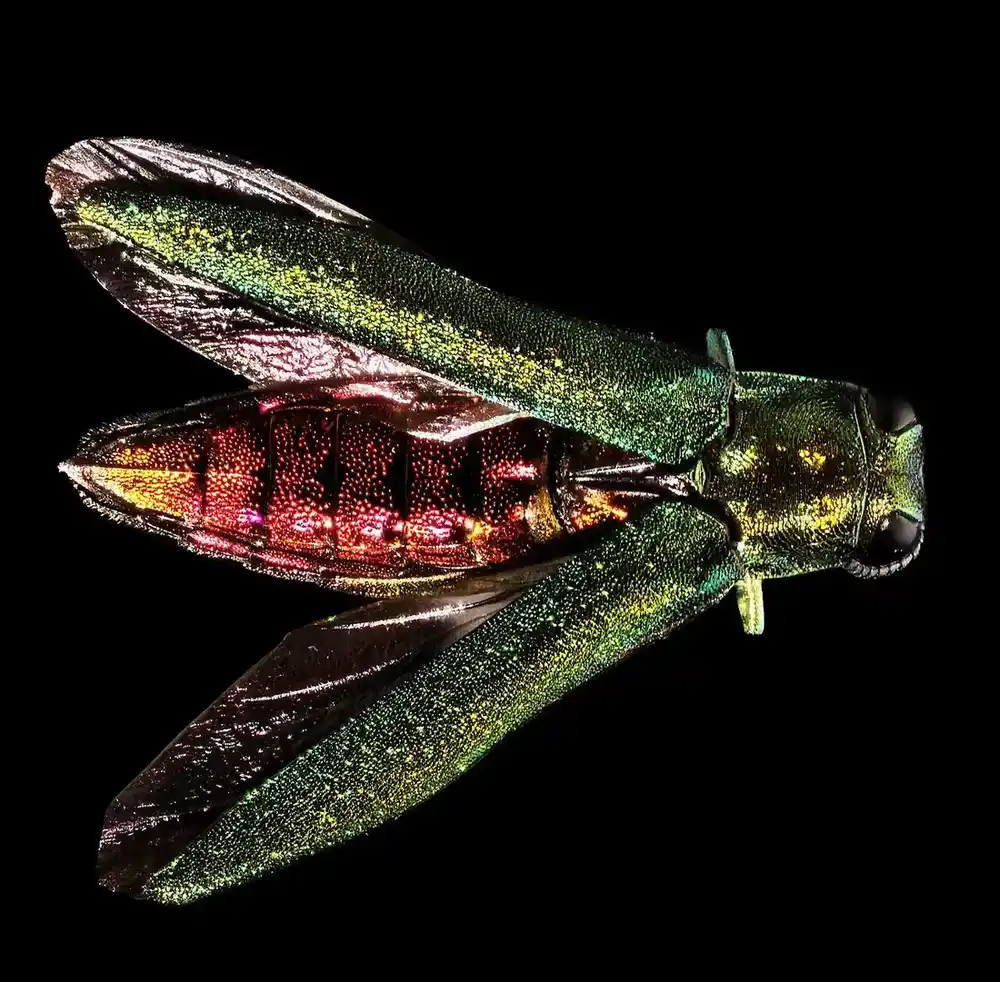
The emerald ash borer's signature is written top-down: the upper crown thins, bark splits over galleries, woodpeckers fleck the trunk for the larvae inside.
Why This Work Runs in Haysville
The emerald ash borer deserves its own paragraph because it is rewriting Wichita's canopy. The beetle's larvae feed under the bark, cutting the tree's plumbing in ribbons; the tree dies over two to four years from the top down. Systemic trunk treatments protect a sound ash on a repeating cycle - an ongoing program, like a prescription, that only works while enough crown remains to move the treatment through the tree.
No town in the metro reads storm season like Haysville, and its trees are the proof: the pre-1999 survivors are a scattered old guard, and the replanting wave of the 2000s - chosen fast, for quick shade - is now mid-size and showing its species choices. The town's tree work is mid-life work now: structural pruning, honest looks at the fast-fill species, and keeping the new canopy on a better schedule than the old one got.
In Haysville, that plays out street by street - for tree health, watch the drip line - chlorosis, thin crowns and early fall color live there. On the Haysville run, crews read the bases first - the fungus and flare story is the fastest route to the truth in this neighborhood.
Deep summer rearranges priorities. Drought stress tests the young plantings and the tight-soiled street trees first - curled leaves, early color, dieback at the crown's edges - and any storm-weakened union begins to open under full leaf weight. Trees read in July are trees understood honestly: nothing hides under a full Kansas sun.
Homeowners are often surprised by how much of the visit is looking rather than cutting. That assessment time is the work: it is what separates a scope matched to your actual tree from generic work that misses it. Ask questions - a good arborist can show you exactly what they found, with photographs.
Right now the calendar favors preparation; in Haysville that means the trees with sound unions and cleared deadwood carry the lightest load when the season turns.
Do not cut anything before the visit. A fresh amateur cut over a defect buries the evidence and can turn a one-visit diagnosis into two. Photograph what you see instead - a phone photo is the most useful thing you can hand an arborist.
How Tree Health & Disease Treatment Works in Haysville
The full step-by-step process for this service - inspection, scope, the work itself and follow-up - is laid out on the main Tree Health & Disease Treatment page. In Haysville the same sequence runs with the local map in hand: the canopy around Haysville's rebuilt Main Street and the Haysville Fall Festival grounds, the housing pattern described above, and the exposure this neighborhood actually carries.
The Haysville Angle
Ask anyone who works trees in Haysville and they will tell you the pattern repeats: the storm losses, the species failures, and the seasons grade the result. Where the weather lands hardest follows the housing and the trees planted with it. Rebuilt 2000s homes in the old core, postwar homes elsewhere, and steady new subdivisions.
On the tree side, the pattern is written by the neighborhood itself. No town in the metro reads storm season like Haysville, and its trees are the proof: the pre-1999 survivors are a scattered old guard, and the replanting wave of the 2000s - chosen fast, for quick shade - is now mid-size and showing its species choices. The town's tree work is mid-life work now: structural pruning, honest looks at the fast-fill species, and keeping the new canopy on a better schedule than the old one got. A proper tree health & disease treatment call in Haysville therefore starts with reading - the exposure, the defects, the evidence - and only then moves to the work.
Haysville does not sit alone on the map. It weathers the same storms as South Wichita, Derby and Planeview - the same cells cross the county, the same wind works the same canopies, and the same seasons move through all of them within the same few weeks. For homeowners, the useful takeaway is simple: your block's pattern is knowable, and the work follows the pattern.
On the route map, Haysville sits in the sedgwick county city group, ZIP 67060 - close enough to South Wichita, Derby that crews work them on the same runs. That local memory is the quiet advantage of route-based work in Haysville.
One thing this neighborhood teaches every crew that works it: the order matters. Diagnose the whole tree, not the symptom that triggered the call - the limb you see fell from a failure that started somewhere structural, and cutting without that map buys the problem back within a season or two.
Prevention That Helps in Haysville
- Start ash decisions now: inventory your ash, choose the keepers while their crowns are full, and budget the program or the removal - but do not drift.
- Water deeply in drought, especially young trees and chlorotic ones; a stressed tree is every pest's invitation.
- Mulch wide and shallow over root zones, keep the flare visible, and never let a grade change bury a trunk.
Rebuilt 2000s homes in the old core, postwar homes elsewhere, and steady new subdivisions.
Keep Exploring
Tree Health & Disease Treatment nearby:
- Tree Health & Disease Treatment in South Wichita
- Tree Health & Disease Treatment in Derby
- Tree Health & Disease Treatment in Planeview
- Tree Health & Disease Treatment in Clearwater
More services in Haysville:
- Lot & Land Clearing in Haysville
- Storm Damage Cleanup in Haysville
- Debris & Firewood Removal in Haysville
- Tree Removal in Haysville
See the full tree care page for Haysville and the Tree Health & Disease Treatment overview for Wichita.
Tree Health & Disease Treatment in Haysville - Questions
Can my Haysville ash tree be saved from the emerald ash borer?
If its crown is still substantially full and its structure sound, a systemic treatment program can protect it indefinitely, renewed on its multi-year cycle. If the borer has taken a third or more of the crown, treatment rarely restores it, and the honest money goes to removal and replanting. The assessment measures the crown and the borer sign, and the answer follows the measurement - which is why the look should happen before the thinning you can see from the street.
My Haysville tree looks sick but I do not know why. Where do I start?
With the ground, honestly: most unexplained decline in Wichita traces to roots and soil - compaction, buried flares, girdling roots, drought debt - with pests arriving second to feed on the weakened. The diagnostic visit reads base and site before crown and sprayer, because treating a soil problem with a pesticide is the most expensive way to learn the difference.
What makes Tree Health & Disease Treatment different in Haysville than in the rest of Wichita?
The trade is the same; the map is not. Haysville has its own planting pattern, its own exposure and its own storm history - river bend, open edge, or subdivision grid. Tree Health & Disease Treatment here is planned from those three, which is why this page exists separately from the citywide one.
A Dead Limb Over the Roof, a Leaning Trunk or Storm Debris in the Yard?
One call connects you with a tree care professional serving Wichita and the surrounding communities - assessment, trimming, removal and cleanup.
📞 Call Now