Tree Health & Disease Treatment in South Wichita
Tree Health & Disease Treatment for South Wichita homes - local conditions, a clear process, and one call to get it started.
In South Wichita, tree health & disease treatment begins with a look up, not a ladder - the evidence here writes its own work order.
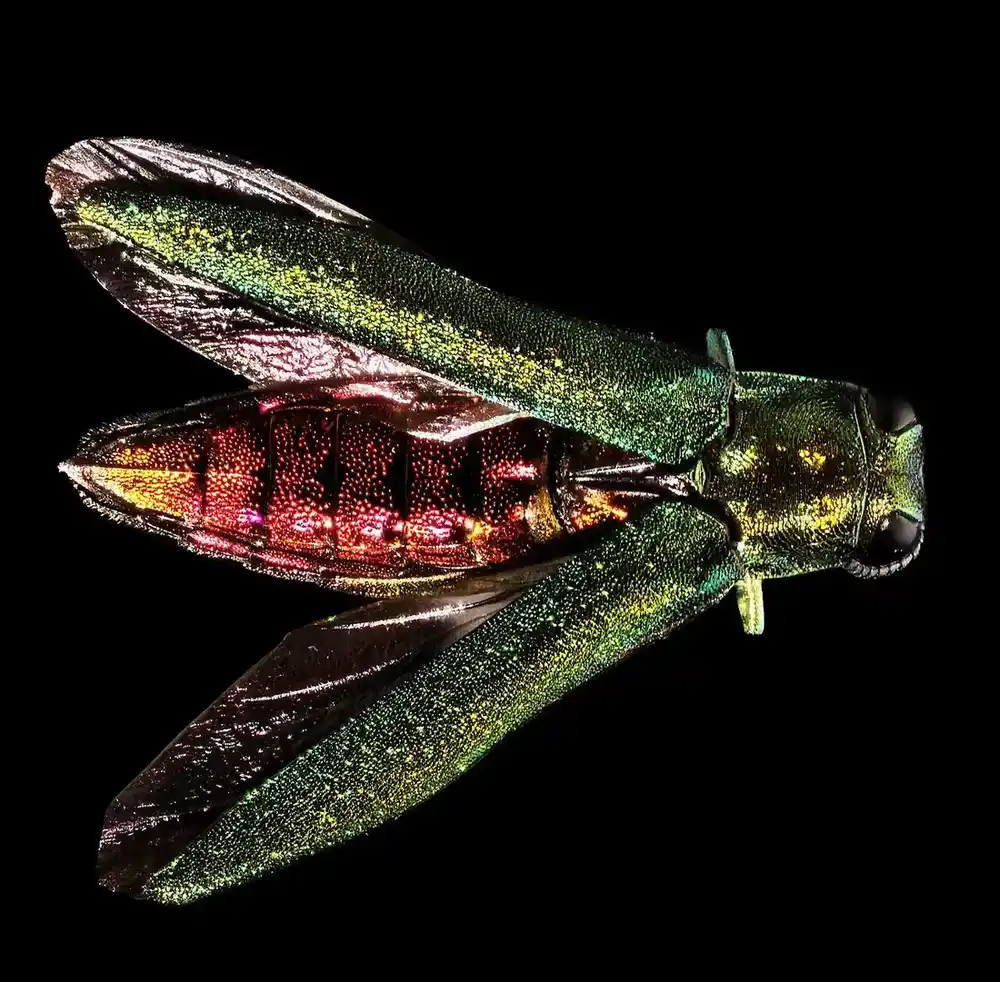
The honest core of tree health work in South Wichita: treatment protects, it rarely resurrects. The ash treated while its crown is full stays full; the ash treated after the borer took half of it stays half. Health programs are therefore built on timing - assessments early, treatments in their windows, and the discipline to say when a tree is past treating.
South Wichita grew along the Pawnee and Broadway corridors as a working-class side of the city, with Pawnee Prairie Park and the Cowskin Creek greenbelt at its heart. Its tree story is a storm story: the May 1999 tornado and the April 2012 tornado both crossed this side of town, and the canopy has been regrowing - and being replanted - ever since.
This part of the county has its own version of every tree. Postwar ranch and minimal-traditional homes, many re-landscaped in waves after the storm years - and that shapes the tree work directly. Two tornado paths crossed here thirteen years apart, so South Wichita's trees come in age bands: the pre-1999 survivors, the post-1999 plantings now at mid-size, and the fast fill-ins - Bradford pears and silver maples - planted for quick shade that are now splitting on schedule. For tree health & disease treatment in South Wichita, health calls here read the crown's thin spots, the bark and the soil before any treatment.
From Pawnee Prairie Park along the Cowskin Creek outward, South Wichita is a sequence of planting decisions made decades ago - and tree health & disease treatment is how the present collects on them.
Signs South Wichita Homes Need Tree Health & Disease Treatment
Cankers, oozing and cracked bark
Sunken, discolored patches that weep or crack are the tree's infections made visible - bacterial, fungal or the aftermath of storm wounds.
Yellow leaves with green veins
Iron chlorosis - pin oaks, silver maples and river birch in alkaline Kansas soil unable to take up iron.
Oak leaves wilting in early summer
Oak wilt moves fast in the red oak family - leaves bronzing and dropping in June, whole trees dead by August, and the disease traveling to the next oak through grafted roots.
Why This Work Runs in South Wichita
Every treatment has a window, and the windows run on the pest's calendar, not the owner's: bagworm spray works on young larvae in early summer and barely touches the grown bags; oak wilt is prevented by winter pruning and root-graft discipline, not cured in July; borer treatment starts before symptoms in a tree worth keeping. The health visit's real product is that calendar, fitted to your trees.
Two tornado paths crossed here thirteen years apart, so South Wichita's trees come in age bands: the pre-1999 survivors, the post-1999 plantings now at mid-size, and the fast fill-ins - Bradford pears and silver maples - planted for quick shade that are now splitting on schedule. Storm-weakened trees that were never assessed are the standing risk.
In South Wichita, that plays out street by street - for tree health, watch the drip line - chlorosis, thin crowns and early fall color live there. The South Wichita file, in one line: know the unions, know the bases, and the work list shortens itself.
Summer splits in two: the storm tail of June and early July, when late cells still tear at crowns, and the long bake that follows, when drought stress shows first in the trees planted in tight soil and parking-lot islands. Most storm damage is discovered in summer - the storm did the work in spring, and the failures report as the heat and wind finish them. Deep watering of young trees is the season's quiet essential.
Wichita visits run on storm time in one respect: the season outside the door shapes the advice inside it. A spring call is about storm readiness; a summer call is about borer sign and drought; a fall call is about the assessment window. Same house, same tree - four different correct visits across the year.
Around Pawnee Prairie Park along the Cowskin Creek, the season shows up early: exposed blocks and older trees run a few weeks ahead of the sheltered ones.
One more preparation that matters on the plains: tell the office about any lines through the canopy, septic fields or new concrete on the property. What is under and over the tree shapes the method more than most homeowners expect.
How Tree Health & Disease Treatment Works in South Wichita
The full step-by-step process for this service - inspection, scope, the work itself and follow-up - is laid out on the main Tree Health & Disease Treatment page. In South Wichita the same sequence runs with the local map in hand: the canopy around Pawnee Prairie Park along the Cowskin Creek, the housing pattern described above, and the exposure this neighborhood actually carries.
The South Wichita Angle
Ask anyone who works trees in South Wichita and they will tell you the pattern repeats: the storm losses, the species failures, and the seasons grade the result. Housing here tells the arborist where to look first. Postwar ranch and minimal-traditional homes, many re-landscaped in waves after the storm years.
And the canopy carries its own local accent. Two tornado paths crossed here thirteen years apart, so South Wichita's trees come in age bands: the pre-1999 survivors, the post-1999 plantings now at mid-size, and the fast fill-ins - Bradford pears and silver maples - planted for quick shade that are now splitting on schedule. Storm-weakened trees that were never assessed are the standing risk. That is why tree health & disease treatment in South Wichita is planned from assessment rather than from a script - the visit reads this map before any scope is chosen.
South Wichita does not sit alone on the map. It weathers the same storms as Planeview, Oaklawn and Delano - the same cells cross the county, the same wind works the same canopies, and the same seasons move through all of them within the same few weeks. Homes on these blocks share crews, routes and seasons - which is why a tree solved properly on one street tends to stay solved.
On the route map, South Wichita sits in the wichita neighborhood group, ZIP 67211 - close enough to Planeview, Oaklawn that crews work them on the same runs. For tree health & disease treatment, that grouping matters - exposure, timing and canopy age are read at the route level, not guessed address by address.
There is a pattern to when South Wichita calls, and it is not random: the first hard wind after a wet spring, the first ice after a wet fall. Both find the same defects, and both are predictable - which is the entire argument for the assessment that happens between them.
Prevention That Helps in South Wichita
- Buy local firewood and move none from infested ground - the borer travels in the firewood pile farther than it flies.
- Water deeply in drought, especially young trees and chlorotic ones; a stressed tree is every pest's invitation.
- Prune oaks in winter only, and paint oak wounds immediately in the growing season if they happen - oak wilt discipline is cheap and absolute.
Postwar ranch and minimal-traditional homes, many re-landscaped in waves after the storm years.
Keep Exploring
Tree Health & Disease Treatment nearby:
- Tree Health & Disease Treatment in Planeview
- Tree Health & Disease Treatment in Oaklawn
- Tree Health & Disease Treatment in Delano
- Tree Health & Disease Treatment in Southwest Wichita
More services in South Wichita:
- Stump Removal in South Wichita
- Storm Damage Cleanup in South Wichita
- Stump Grinding in South Wichita
- Cabling & Bracing in South Wichita
See the full tree care page for South Wichita and the Tree Health & Disease Treatment overview for Wichita.
Tree Health & Disease Treatment in South Wichita - Questions
Is oak wilt in South Wichita, and how do I protect my oaks?
Oak wilt is established in Kansas and moves two ways: beetles carrying spores to fresh wounds in the warm months, and root grafts between neighboring oaks underground. Protection is discipline - prune only in winter, paint any warm-season wound the day it happens, and never move oak firewood from a dead tree. A wilting red oak in June is a call-now diagnosis; whites resist longer, reds can die in weeks.
Why are my South Wichita pin oak's leaves yellow every summer?
Almost always iron chlorosis: Wichita's alkaline soils lock iron in a form the tree cannot use, so new leaves come in yellow between green veins. The fixes run from soil acidification and chelated iron treatments to, in stubborn ground, accepting the tree is in the wrong soil and planning its succession. It weakens the tree yearly, so it is worth treating as a condition, not a quirk.
When is Tree Health & Disease Treatment most needed in South Wichita?
Need follows the season and the neighborhood together: the storm months raise the baseline everywhere, and South Wichita's specific exposure - its slope aspects, its planting era, its canopy age - decides which weeks bite hardest. A local assessment reads both clocks at once.
A Dead Limb Over the Roof, a Leaning Trunk or Storm Debris in the Yard?
One call connects you with a tree care professional serving Wichita and the surrounding communities - assessment, trimming, removal and cleanup.
📞 Call Now